10.19.2009
The Chinese Communist Party - Russia's Role Model
"MOSCOW — Nearly two decades after the collapse of the Communist Party, Russia’s rulers have hit upon a model for future success: the Communist Party.
Or at least, the one that reigns next door.
Like an envious underachiever, Vladimir V. Putin’s party, United Russia, is increasingly examining how it can emulate the Chinese Communist Party, especially its skill in shepherding China through the financial crisis relatively unbowed.
United Russia’s leaders even convened a special meeting this month with senior Chinese Communist Party officials to hear firsthand how they wield power.
In truth, the Russians express no desire to return to Communism as a far-reaching Marxist-Leninist ideology, whether the Soviet version or the much attenuated one in Beijing. What they admire, it seems, is the Chinese ability to use a one-party system to keep tight control over the country while still driving significant economic growth.
It is a historical turnabout that resonates, given that the Chinese Communists were inspired by the Soviets, before the two sides had a lengthy rift.
For the Russians, what matters is the countries’ divergent paths in recent decades. They are acutely aware that even as Russia has endured many dark days in its transition to a market economy, China appears to have carried out a fairly similar shift more artfully.
The Russians also seem almost ashamed that their economy is highly dependent on oil, gas and other natural resources, as if Russia were a third world nation, while China excels at manufacturing products sought by the world.
“The accomplishments of China’s Communist Party in developing its government deserve the highest marks,” Aleksandr D. Zhukov, a deputy prime minister and senior Putin aide, declared at the meeting with Chinese officials on Oct. 9 in the border city of Suifenhe, China, northwest of Vladivostok. “The practical experience they have should be intensely studied.”
Mr. Zhukov invited President Hu Jintao, general secretary of the Chinese Communist Party, to United Russia’s convention, in November in St. Petersburg.
Whatever the motivation, Russia in recent years has started moving toward the Chinese model politically and economically. After the fall of the Soviet Union in 1991, Russia plunged into capitalism haphazardly, selling off many industries and loosening regulation. Under Mr. Putin, the government has reversed course, seizing more control over many sectors.
Today, both countries govern with a potent centralized authority, overseeing economies with a mix of private and state industries, although the Russians have long seemed less disciplined in doing so.
Corruption is worse in Russia than China, according to global indexes, and foreign companies generally consider Russia’s investment climate less hospitable as well, in part because of less respect for property rights.
Russia has also been unable to match China in modernizing roads, airports, power plants and other infrastructure. And Russia is grappling with myriad health and social problems that have reduced the average life expectancy for men to 60. One consequence is a demographic crisis that is expected to drag down growth.
The world financial crisis accentuated comparisons between the economies, drawing attention to Moscow’s policies. In June, the World Bank projected that China’s economy would grow by 7.2 percent in 2009, while Russia’s would shrink by 7.9 percent.
Politically, Russia remains more open than China, with independent (though often co-opted) opposition parties and more freedom of speech. The most obvious contrast involves the Internet, which is censored in China but not in Russia.
Even so, Mr. Putin’s political aides have long studied how to move the political system to the kind that took root for many decades in countries like Japan and Mexico, with a de facto one-party government under a democratic guise, political analysts said. The Russians tend to gloss over the fact that in many of those countries, long-serving ruling parties have fallen.
“We are interested in the experience of the party and government structures in China, where cooperation exists between the ruling party and the judicial, legislative and executive authorities,” Vladimir E. Matkhanov, a deputy in Russia’s Parliament, said at the Suifenhe meeting, according to a transcript.
United Russia praises the Chinese system without mentioning its repressive aspects. And the party’s stance also appears to clash with repeated declarations by Mr. Putin, the former president and current prime minister, and President Dmitri A. Medvedev that Russia needs a robust multiparty system to thrive."
10.09.2009
Deng Xiaoping - The Real Revolutionary Hero of China
"Thursday was the 60th anniversary of the day Mao Zedong stood on the platform at Tiananmen Square and announced the formation of the People’s Republic of China. But the revolution that millions of Chinese are really celebrating began 30 years ago — under the leadership of Deng Xiaoping.
Still, most Chinese recognize that the true revolution belongs to Deng Xiaoping. No specific reforms were as important as his persistence in further opening China’s doors and encouraging its people to scour the world for new ideas in science, technology and management.
One first step was to promote talent at home. Many universities had been closed during the Cultural Revolution, which ended with Mao’s death in 1976. When he returned to power in 1977, Deng embarked on a colossal rush to hold national entrance examinations and reopen universities.
Deng also frequently invited Chinese-American scientists for talks. His key question was always: How can China catch up in science? In 1978, when Frank Press, President Jimmy Carter’s science adviser, visited China, he was taken aback when Deng proposed sending far more students and faculty to the United States than Dr. Press had the mandate to offer. Deng was so insistent on a quick answer that Dr. Press called President Carter, waking him in the middle of the night. President Carter immediately accepted Deng’s proposals.
In the 30 years since Deng started his revolution and further opened China’s doors to foreign trade and investment, hundreds of millions have risen above the poverty level, China has become the workshop of the world, urban slums have been replaced by forests of modern high-rise buildings, superhighways have succeeded dirt roads and cars have displaced donkey carts.
To be sure, the last 30 years have had plenty of problems — corruption, crackdowns on dissidents, environmental degradation, unequal educational opportunities and a failing rural health system. Chinese leaders lacking confidence in their ability to maintain public order are not likely to listen to Western advice on how to handle human rights, minorities and dissidents. China will move at its own pace, but Deng’s revolution demonstrated that it is able to take positive lessons from the West.
So on this 60th anniversary, we should join in the celebration of the Deng revolution and not be distracted by the portrait of Mao hanging in Tiananmen Square."
10.08.2009
Kipling & Clark Founder Randy Lynch's 15 Favorite Things (Places & Experiences) in Southeast Asia!
-Randy, Bev & Zen Lynch
1. Luang Prabang/Laos
The ancient royal city of Luang Prabang is a place where time seems to stand still. Bev, Zen and I have always felt Luang Prabang to be among out favorite hidden treasures in Southeast Asia. It's a slow, sleepy town nestled on the Mekong River and rich in Buddhist culture. This former royal capital is a UNESCO World Heritage Site with a fusion of monasteries, traditional Laotian dwellings and French-colonial architecture. (We love La Residence and the boutique Maison Souvannaphoum - Amantaka opening!)
2. Maesa Elephant Camp/Chiang Mai, Thailand
This is among the unique highlights of our Southeast Asia trips. What the Four Seasons, Peninsula and Mandarin are to luxury hotel accommodations, the Maese Elephant Camp is to very personal, hands-on, elephant training. Your private elephant camp experience will include a breif training of elephant commands, riding the elephants on your own (no worries with training close by), personally bathing the elephants in the river (so much fun!) and end with a painting session with your elephants. Yes, with directions, these elephants can actually paint and draw.
3. Mekong River Cruise (Laos - Thailand)
In contrast to the 5-Star luxury resorts we normally use in Southeast Asia, our nine-year old daughter, Zennia, considers the tranquil Luang Say Cruise down the Mekong River as "roughing-it."
The 2 day/1 night journey down the Mekong River from Luang Prabang to Huai Say Laos, across the border from Thailand, is a great way to wind down and simply enjoy the Mekong River culture and scenery. You literally overnight in the middle of nowhere, on the banks of the Mekong at the Luang Say Lodge. Although certainly not luxury, the lodge has clean, comfortable villas overlooking the Mekong and a friendly, Laotian staff that earnestly care for your needs. This is a rustic Spartan environment in a good way.
4. Altruistic Opportunities/Cambodia and Laos
Our various trips to Cambodia and Laos have been instructional in terms of the tangible ways we can improve the everyday lives of underpriveleged children. COSO Orphanage in Siem Reap, New Day Cambodia in Phnom Penh, and countless primary schools in Laos and Cambodia offer numerous opportunies to give back to these beautiful, yet very needy kids. Many of our clients, particularly the younger ones, find these activities eye-opening and heartwarming, a real-world contrast to their privileged life back in the U.S.
The genuine kindness and heartfel gratefulness you see in the children's faces and beaming smiles make these experiences incomparably gratifying.
5. Angkor Wat/Cambodia
We feel the various temples of Angkor represent the most amazing and enduring architectural acheivement of any religious site in Asia. The temples, built between the 8th and 13th centuries, when the Khmer civilation was at the height of its development, are spread out over approximately 40 miles around the village of Siem Reap. We particularly love Angkor Thom, Banteay Srei, and, of course, Angkor Wat! (Added bonus 0 staying at Grand Hotel D'Angkor or Amansara!)
6. Hanoi/Vietnam
Hanoi represents all that is most compelling about Vietnam; the resourceful/entrepreneurial spirit of its people (do not miss "36 Streets"), its rich French traditions as reflected in its charming French-colonial architecture (think Sofitel Metropole) and French-incluenced Vietnamese cuisine ("Seasons" and so many other wonderful restaurants), and, of course, its symbol as Vietnam's cultural/political capital. The legacy of Ho Chi Minh is ubiquitous - his mausoleum is spell-bounding and abominable.
7. Buddhism and Its Intrinsic Service Culture
Buddhism fully embraces the concept of altruism, kindness/empathy to others, and service. Think of Buddhism as The Golden Rule (squared!). It is no coincidence that the Buddhist-based cultures of Cambodia, Laos, Thailand, Burma, Sri Lanka, and parts of India, represent the highest level of service/hospitality that you will find anywhere.
8. AMAN in Southeast Asia (the very very best!)
Well-known by many of our clients and friends, Singapore-based Aman Resorts represent the pinnable of world-class luxury hotel/resort hospitality. While Peninsula, Four Seasons, and Mandarin rule the 5-Star deluxe hotel category, Aman, alone, occupies the very elite level; small, extreme high-touch, singular, and personal. Each resort is characterized by a small number of rooms (typically less than 55) and minimalist architecture designed to complement the location's natural settings. Amansara (Siem Reap), Amanpuri (Phuket), Amankila and Amandari (Bali) among others - we love Aman in Southeast Asia!
9. Burma/Cruising on the Irrawaddy River
We feel the intoxicating Irrawaddy River epitomizes the wonderful culture of Burma - and endearing, leisurely charm and innocence that was perhpas pervasive in Southeast Asia fifty years ago. Rudyard Kipling "thought it quite unlike any land you know about." The 2-night cruise on the RV Pandaw (only 16 cabins) affords wonderful village stops only accessible via the river. The meticulous service and food on the Pandaw is another bonus!
10. Laotian Baci Ceremony
Bev, Zen and I participated in our first Baci ceremony back in 2004 and thought it was among the highlights of our Luang Prabang stay. (Zen was just 4 then!) The Baci ceremony pre-dates the arrival of Buddhism in Laos (8th century) and is considered the most respectful form of welcome from Laotian villagers. During the ceremony the selected individuals tie strings around their wrists believing the strings will protect the wearer. It is suggested the strings must not be removed for at least three days. The ceremony is highlighted by accompaniment of music and traditional dance. It's a very moving personal ceremony, and is meant to bestow the protective power of the spirits of the visitor(s).
11. The Oriental/Bangkok
Founded in 1876, the Oriental really sets the standard for subtle, understated luxury - the service here is legendary. The State Rooms, River Wing, are our favorites - decorated in traditional Thai style with dark teakwood and bright Thai silk. Another plus is their amazing spa (accessible via ferryboat directly across the Chao Phraya River from the hotel).
12. Ballooning Over Bagan (Bagan/Burma)
The sunrise hot-air balloon ride over Bagan is not to be missed, perhaps the most compelling hot-air balloon ride in all of Asia. You rise over 2,000 pagodas, stupas and monasteries built during the Bagan Dynasty 1044A.D. Bagan is to Burma what Angkor Wat is to Cambodia.
13. Four Seasons Tag Team! (Chiang Mai and Chiang Rai/Thailand)
We cannot imagine two nearby luxury resorts with better service or more beautiful settings. First, the Four Seasons Chiang Mai - landscaped gardens, water lily ponds, water buffalo (Zen loved the morning rides!), set in terraced ride paddies. No pretention here, the service is subtle, heartfelt, natural, almost wabi-sabiesque in its delivery. Although smaller (only 15 luxury "tents") in scale, the Four Seasons Tented Camp/Chiang Rai, Golden Triangle offers every bit of service as its sister property in Chiang Mai. Set in a lush hillside overlooking Burma and Laos, the tented accommodations offer every custom amenity imaginable. The focal point here is elephants - much fun!
14. Phnom Penh/Cambodia
Although small by comparison to other Asia capitals, dusty, sleepy, undeveloped Phnom Penh makes us feel that we are visiting a place from time's past. Ubiquitous French-colonial architecture, genuinely friendly, unpretentious natives, and history - this is a nice place to unwind. We particularly enjoy lunch or dinner at Foreign Correspondant's Club/FCC on the bankd of the Mekong.
15. Southeast Asia Kids!
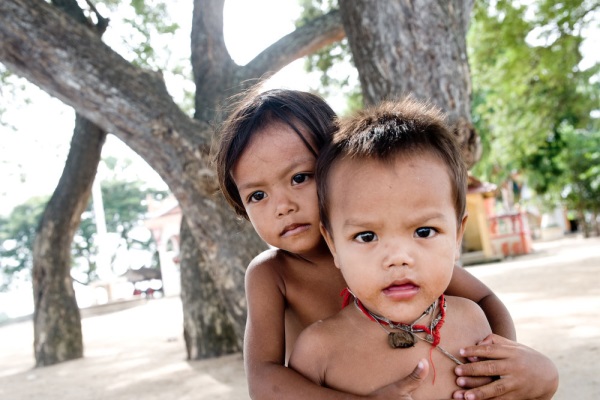
Of course, all children are beautiful. Nevertheless, the children of Vietnam, Cambodia, Laos, Thailand and Burma project so much happiness and heartfelt kindness in their eyes and smiling faces, they always hold a very special place for us.
9.16.2009
Our 15 Favorite Things about Japan
Japan's Shintoesque identity has made the Japanese perhaps the cleanest people on earth. Regardless of where you travel in Japan, the natives are well-groomed, neat, and spotlessly clean. This extends to streets, homes, office buildings, wherever!
2. Geisha Culture
A private geisha dinner with a Geiko (geisha in Kyoto), Maiko (apprentice geiko), and Jikatu (instrument-playing geiko), is an other worldly experience. While being served a scrumptious multi-course kaiseki dinner, you are serenaded with traditional Japanese song and dance. Separately, Zen feels her geisha "makeover" is among her most "awesome" experiences in Japan.
3. Japan's Railway System
Similar to so much of Japan, its railway/shinkansen (bullet) transport system is meticulously efficient, immaculately clean, very fast, and completely reliable. If only we had shinkansen in the states! We particularly love the First Class N700 Green Cars - ergonomic seating with an unbelievably smooth ride!
4. Japan's bathroom culture
Toto's automated toilets/washlets make Japan's bathroom culture most unique, perhaps a further expression of Shinto clealiness/hygiene. These toilets are amazing - all-spraying, all deoderizing, with oscillating heated massage! Bev, Zen and I agree that the Toto washlet is a fun, hands-free, spa-like bathroom experience. This is another bonus for staying at the Peninsula!
5. Sum0 Wrestling
If you are unable to make one of the bi-monthly Sumo wrestling tournaments, a private morning Sumo wrestling practice session is the next best thing - followed by a Chanko breakfast with the wrestlers!
6. Wabi-sabi aesthetic
The Japanese worldview/state of mind emphasizing simplicity and purity - the beauty and awe of all things humble, imperfect, unpretentious.
7. Anime (and manga)
Bev, Zen and I are all big anime (Japanese animated film) fans, particularly as manifested in the Ghibli Museum, west of Tokyo in Mataka. Ghibli features the work of Academy award-winning filmmaker, Hayao Miyazaki ("spirited Away"). Ghibli is a kid's animation wonderland!
8. Onsen (natural hot springs)
Whether indoors or outdoors, Japan's ubiquitous hot springs are a national treasure, relaxing, therapeutic, cathartic. Gora Kadan in Hakone is our favorite!
9. Shinto shrines/Buddhist temples
Fushimi-inari (our favorite!) and Heian Jingu in Kyoto, and Meiji in Tokyo; Kiyomizudera ("Pure Water Temple"), Kinkakuji (Golden Pavilion), Nanzenji (Zen's favorite) in Kyoto, and, of course, Todaiji in Nara.
10. High-touch (luxury) ryokans)
Amazingly, two of the most famous ryokans (Japanese inns) in Kyoto are located directly across the alleyway from each other. It's difficult to distinguish Tawaraya from Hiiragiya - they both represent the very highest levels of high-touch service. Both ryokans successfully integrate the finest Japanese traditions and wabi-sabi philosophy with contemporary conveniences that seasons travelers expect.
11. Japanese (matcha) green tea
The highest quality of all green teas, matcha (MA-cha) is a fine, powdered Japanese green tea, originally conceived by Chan Buddhists in China. Matcha is an integral part of the Japanese tea ceremony and a very special treat when visiting Japan. All hail matcha!
12. Japanese food, in all of its variety!
Sushi, tempura, robata, soba, kaiseki dinners.
13. Japanese vending machine craze
Japan is the vending machine epicenter of the world - clean, reliable and pervasive throughout the country. You can get just about anything in Japan's vending machines: food (including hot ramen), alcohol, soft dinrks, even fresh eggs, umbrellas and lingerie!
14. White-gloved taxi service
We always look forward to experiencing Japan's meticulously clean and efficient taxi service, particularly the drivers' clean, white gloves and white lace seat covers.
15. Japanese Professional Baseball
Enthusiastic, yet perfectly choreographed participation by the fans, attending a professional Japanese baseball game makes one feel American-style baseball is comparatively eneventful. Coordinated cheering and towel waving, deafening roar of the crowds, and, of course, the ubiquitous stadium "beer girls" make baseball in Japan so much fun!
9.15.2009
Burma Brief
100 years ago Rudyard Kipling visited Burma and “thought it quite unlike any land you know about.”
Burma has changed little since colonial times.
Burma is best described as a product of times past – an endearing, leisurely charm and innocence that was perhaps pervasive throughout S.E. Asia fifty years ago. Unlike the rest of Asia, however, Burma has remained reclusive, especially since military junta imposed its rule over the country in 1988.
Due in part to Burma’s self-imposed isolation, Western influence, particularly the grittier commercial aspects, are not to be found here. You will see few Burmese dressed in Western garb and you will see no Starbucks or McDonald's here.
Despite the widespread adoption of Buddhism, the pre-Buddhist practice of nat (spirit) worship is ubiquitous throughout much of everyday Burma. Traditional beliefs encompass a spirit world inhabited by a cast of supernatural beings, none more important than nats, mischievous little spirits that can wreak havoc if not placated with offerings of flowers, food, and
Similar to other Southeast Asian countries, Burma is a land of little smiling faces. We are particularly drawn to the young Burmese women displaying their thanaka applied faces. Thanaka, a type of sandalwood paste, is used as a beauty mark as well as a sun protector for many Burmese children and young women.
9.14.2009
Our 12 Favorite Things in Hong Kong (Randy, Bev, & Zen Lynch) – Fall 2009
Hong Kong’s expansive skyline, including so much world-class architecture (Bank of China Building being our favorite!), set in the backdrop of Victoria Harbor, makes this panorama perhaps the most wondrous in all the world. (The nightly “Symphony of Lights” is a must-see!)
2. Hong Kong’s unabashed sense of status consciousness/consumerism.
If you’re looking for a sense of spirituality or transcendental self-awareness, Hong Kong may not be the place for you. As Taiwanese essayist Lung Yingtai has noted: “In Hong Kong, economic benefit is the core value for all decision-making and development is the sole ideology.” This is a city of hyper-drive commerce where it seems material success is everyone’s ultimate goal.
3. The Star Ferry
Dating back to 1880, the plain green and white Star Ferry vessels cross Victoria Harbor throughout the day and night between Hong Kong Island and Kowloon. Perhaps the best transport value in the world – Hong Kong’s spectacular skyline/harbor views for a cost of approx. USD1 per person!
4. The very best luxury hotels in the world
The Mandarin, the Peninsula, the Four Seasons, the Intercontinental, the new Upper House, too many to name. Bev, Zen and I all feel no other city can match Hong Kong in terms of the number of high-touch 5 star deluxe luxury hotels. The service culture here is innate, almost genetic.
5. Lan Kwai Fong night-life
We always love returning to the trendy, chic Lan Kwai Fong area for great restaurants, night-clubs, and a high-energy group dynamic. Its two main streets, D’Aguilar and Lan Kwai Fong, are packed with office workers, expats, and local shakers enjoying the restaurants, bars and shops. Good for singles and families alike!
6. Hong Kong’s unique (walking) neighborhoods
Hollywood Road (antiques), Gough Street in Central (hip alternative to expat-dominated SOHO), Sheung Wan (one of Hong Kong’s oldest original settlements), Mong Kok (residential/industrial area including Bird Market and many shops catering to local Chinese), Midlevels (residential area with world’s largest series of escalators), Herbal Market (Chinese herbal drugstores and doctor consultations), Stanley Market (cheap, touristy shopping!). Many amazing neighborhoods for walking and people-watching!
7. Unique, wonderful private clubs
China Club, Halo, Azure, Volar, Club 71 – take your pick!
8. Wonderful variety of food!
Hong Kong is world capital for all foodies. World-class standards and variety of outstanding restaurants – Bo Innovation, Caprice, Halo, Goccia, Felix, Kin’s Kitchen, Indochine 1929, dim sum at traditional Luk Yu Teahouse or with a contemporary twist at Kee Club.
9. Asia-based high-end shopping
Shanghai Tang, Joyce, Douglas Young’s G.O.D. (Goods of Desire), all among Bev and Zen’s favorites!
10. Macau and Hong Kong Helicopter Getaway/Sightseeing
Quick trip to Asia’s new luxury Sin City with a spectacular view from above or stay in Hong Kong with helicopter sightseeing from the helipad atop the Peninsula.
11. A private Junk cruise along Victoria Harbor, along with a BBQ dinner. (So much fun and spectacular scenery!)
12. Hong Kong International Airport
Our favorite airport in all of Asia – meticulously clean and efficient, shopping, restaurants, transport – Hong Kong Airport has it all! It has been named world’s best airport seven out of the last eight years (from SKYTRAX).
9.08.2009
Failure as Viewed in the U.S. vs. Japan
Japan draws a distinct contrast to the American model. Peter Goodman, reporting in the NY Times 09-06-09, writes that in Japan "failure traditionally carries a deeper stigma, an enduring shame that limits the appetite for risk in the view of many of the nation's cultural observers. This makes the Japanese form less comfortable with choices that increase the prospect for failure, even if they promise greater potential gains."
8.18.2009
Air China increases stake in Cathay Pacific to 30%
The share purchases by Swire and Air China on Monday are the maximum stakes that the two companies could purchase without triggering a requirement under Hong Kong law to bid for the whole of Cathay, according to Christopher Pratt, chairman of Swire and Cathay. Mr. Pratt said Monday that the new shareholding wouldn't affect strategy and management at Cathay, and underscored Swire's commitment to remain the single largest shareholder in the airline.
8.04.2009
Japan's Bathroom Culture (TOTO S400!)
7.14.2009
How to Visit a Shinto Shrine
Dip up water and pour over the left hand and then over the right one.
Rinse out your mouth and be sure that your does not directly touch the dipper.
Wash the dipper.
How to make a wish to gods at Shinto Shrine
Throw a coin into the offertory box.
Bow twice.
Clap your hands twice and make a wish during the series of this last motion.
Bow again.
www.howcast.com
Smile-checking in Japan!
7.02.2009
COSO Orphanage
"Nowadays, we are very lacking the budgets for support the children, and request to help from all. Please you all to make small donation to help us by possible who can.
With lists has to spend! We provide have three meals a day, for monthly need to spent $ 1,950 USD for food , $ 126.50 US for Ingredient of cook, $ 90.00 US for wood charcoal, $ 80.00 US for sweets, $ 21. 75 US for toothbrush, $ 50.75 US for fluoride, $ 38.70 US for soap, $ 20.00 US for washing dishes, $10.00 US for toilet washing, $ 37.50 for washing clothes, $ 150.00 USD for rented land, $ 253.50 USD on fee school, $ 100.00 USD for medical supplies, $ 323.20 USD for gasoline and $ 139.00 USD on services of Internet every month. In total, $ 113.03 USD is spent a day, $ 791.21 USD is spent per week and $ 3,390.90 USD is spent for a month.
$113/day, $791/week, $3390/month"
To make a donation to the COSO Orphanage, visit www.cosocambodia.org
On their website, we can see a picture of the "motor-drag tuk-tuk" vehicle that our donation allowed them to purchase! (www.cosocambodia.org/donation) Something so small can make such a big difference in the lives of the children.
6.09.2009
Yokiro Takita’s “Okuribito” (Departures) film a compelling glimpse into Japan’s culture and view of death.
A nokanshi is not really a mortician or an undertaker, but perhaps a gatekeeper/facilitator from the world of the living to the next spiritual realm. After watching this thoroughly engrossing film, one can argue that the Japanese outlook on death makes a lot of sense. Seeing deceased family members made up like wax mannequins at funeral wakes, I feel the more natural and beautiful aesthetic created by the nokanshi makes for a wonderful final journey from this world.
- Randy & Bev Lynch
5.27.2009
Restoring peace to heart of Shanghai
For years,
In typically Chinese defiance of both the global economic crisis and a glut of
Balancing the needs of profit and preservation makes this one of the most challenging, and closely watched, historical restoration efforts in
The hotel’s pedigree is impeccable: brainchild and plaything of Victor Sassoon, the British-Iraqi trader of opium, guns and
From its Lalique glass shaving mirrors to its opulent “Nine Nations Suites” – from Indian, Georgian and Chinese to German, French and Italian – the hotel helped make
But by 2007 – though foreign tourists still made the nostalgic journey to the fusty old landmark where rooms cost about $100 a night – the hotel was overcome by damp and decay. Its signature Old Jazz Band was still playing pre-war favourites, with some of the original octogenarian musicians. But Jia Xue Tai, saxophonist for the band – which now plays at another
But reinstating the Old Jazz Band will be easy compared with the task of restoring the hotel’s interior. Ian Carr of Hirsch Bedner Associates, designers of the restoration, says everything from furnishings to faucets has disappeared and the hotel has had several botched renovations.
“There is no way of telling what was original,” he says. The restorers advertised for information but even getting the original blueprints was hard. Luckily, ceilings were out of reach “they couldn’t knock them down or take them out ... so they just covered them up,” he says, noting that the hotel’s octagonal glass rotunda, covered by gypsum board for decades, will be a centrepiece of the restoration.
Balancing the demands of the hotel’s Chinese state-controlled owners, Jin Jiang International Hotels, and the foreign-owned operators, Fairmont Hotels, has also been tricky.
But Yang Weimin, CEO of Jin Jiang International Hotels, says the company must abide by historical preservation laws. A new building will be built at the back of the hotel to house a swimming pool, spa and large lifts.
But Lu Jiansong, of
“The Peace Hotel belongs to the state, not to
5.18.2009
Today, I Have Lived
"All power and joy to that man who can say, 'today, in this day, I have lived'; tomorrow may bring rain or sun, but nothing can undo, or render worthless, what the fleeting, unrepeatable hour has brought."
- Randy Lynch
5.01.2009
ANA Service
- We loved the curry chicken entree and the tasty & healthy "soy" snack bars!
- Zen and Sofia took special note of the Haagen Dazs ice cream treats at the end of dinner
- Great audio/video selection with over 20 movies to choose from
4.29.2009
We love Japan in the springtime!
HIGHLIGHTS OF OUR TOKYO, HAKONE/KYOTO-NARA CUSTOM TOUR
TOKYO
- The Peninsula Tokyo feels like our Japan home away from home – the staff is so friendly and warm-hearted. Although Bev and I appreciate the sleek design and amenities of our room overlooking the Imperial Palace grounds, Zen and Sofia are convinced the Peninsula’s hot chocolate is the best in Asia!

- Hibiya Park, directly across the street from the Peninsula, is the perfect respite from the hustle and bustle of Tokyo. Our mornings started with a walk through the park’s lush gardens for beautiful cherry blossom views.
- Ghibli Museum (west of Tokyo in Mitaka) is perhaps the most interesting fine-arts museum in all of Japan, featuring the Japanese anime (Japanese animated film) work of Academy award-winning filmmaker, Hayao Miyazaki (“Spirited Away”). This was a euphoric experience for Zen, Sofia and Toni – Ghibli is a kid’s animation wonderland!
- Origami – All of us enjoyed the private one hour origami lesson we arranged at Origami Kaikan. We created fish, our elaborate Christmas tree, talking “lips”, and even a dragon. Although assimilated and refined in Japan, origami was actually introduced to Japan via 6th century Chinese Buddhist monks. The shop at Origami Kada is a treasury of origami related papers and gifts.
HAKONE/GORA KADAN RYOKAN
A short 45-minute bullet train ride from Tokyo, Hakone is a world apart from the big city in terms of the lush, green mountainous environment and its rejuvenating onsen (hot mineral springs).

Our sole purpose in traveling to Hakone was to make a brief relaxation stopover at the amazing Gora Kadan Ryokan – we loved this place! Proprietress Mikawako, the third generation of Fujimotos to run Gora Kadan, has blended traditional Japanese ryokan hospitality with modern Western design in creating a luxurious ryokan spa experience. The Gora Kadan’s original building dates back to 300 years and was the summer home of the Kan’in-No-Miya imperial family.
Gora Kadan was Zen and Sofia’s introduction to a “public” onsen at the ryokan’s main natural hot springs bath area. Following a brief “public” soaking, they retreated to our room with its own private granite open mineral springs bath, fed by the Gora Kadan’s natural springs. With its airy east-west fusion aesthetic, its wonderful (Kaiseki) food service, and total relaxation spa, Gora Kadan is definitely on our A-list for high-touch ryokans in Japan.
THE NEW JR GREEN CAR (N700) BULLET TRAIN
We were most impressed with the new First Class (Green Car) N700 series Shinkansen “bullet” train to Kyoto-Osaka. With its large and improved ergonomic designed seats, LED reading lights and futuristic design, this next-generation rail service is an amazing experience. Its advanced “tilting” capabilities allow the N700 to cruise smoothly up to 186 mph. Think of our advanced jet aircraft on rails! Still, Zen is more impressed with the tasty “Ekiben” station lunchboxes.
KYOTO (THE ONE AND ONLY!)
We feel Kyoto represents the cultural and aesthetic essence of Japan; amazing Shinto shrines and Buddhist temples, the highest quality ryokans, geisha culture, wonderful food, and in April, sakura (cherry blossoms)! And Kyoto at night, particularly in the lantern-lit streets of Gion, is magical and wondrous. There is literally no place on earth like Kyoto.
HANAMI (CHERRY BLOSSOM VIEWING)
From our 2-night base at the Hyatt Regency Kyoto (think Frank Lloyd Wright aesthetic with Japanese refinement) we ventured out our first night for some celebratory “hanami” (cherry blossoms viewing) in Maruyama Park. With all of the remarkable food/game stalls and, of course, the famous weeping cherry tree, this was a fun and amusing night for Zen and Sofia.
TODAI-JI TEMPLE, NARA DEER PARK, AND FUSHIMI-INARI
Today we were re-united with the Xu Family (Jay, Jennifer, and Toni) for two days of exploration, fellowship, and good times! For the next two days we were trusted with our favorite Kyoto guide, Izumi-san. She is simply the best!

Our travels today took us out to Nara and the most impressive Todai-ji Temple (Japan’s largest Buddhist temple within the world’s largest wooden building) and to adjacent Nara Deer Park. Although we were again over-run with the deer feeding, Zen, Sofia and Toni enjoyed every moment! En-route back to Kyoto we stopped at our favorite Shinto shrine, Fushimi-Inari (think of Memoirs of a Geisha!). Dating back to the 8th century. Following a hike up Fushimi’s pathway, Zen, Sofia and Toni wrote their prayers on the wooden blocks at the shrine’s entrance.
MAIKO DRESS UP!
Today was “Geisha” day for the girls! In Kyoto, they do not use the word Geisha, but “Geiko” instead. A younger, apprentice Geiko is called a “Maiko”. A quick way to tell the difference between a Geiko and a Maiko is that the older Geiko always wears a white neck collar.
Today was very exciting because Zen, Sofia and Toni were all made up as Maiko - yes, real Maiko with all the make-up, the wig hair, and beautiful kimonos. Hannah Montana eat your heart out! It took over an hour to prepare their make-up, hair, and kimonos. They were later able to walk down the street like real Maiko in the Gion district. It was unreal!

PRIVATE GEISHA DINNER/ENTERTAINMENT
This was one of the truly special and unique high-lights of our Japan private tour. While being served a delicious multi-course kaiseki dinner at Mitoko in the Gion district, we were graciously hosted by two Geiko and one Maiko. The older Geiko, Yumi-san, played a shamisen, an old Japanese musical instrument that looks like a banjo with a long neck. The younger Geiko, Hisano-san, and the Meiko, Mitsuna-san, performed traditional dancing for us. The dancing was so gentle and beautiful. After our long Kaiseki dinner, Hisano-san and Mitsuna-san taught us some traditional Japanese parlor games to play. Zen will try to teach these to her classmates at Francis Parker School! The most fun game was konpira fune-fune (“slapping box” game). Although too complex to explain, this was great fun!
HIIRAGIYA RYOKAN
We stayed at Tawaraya Ryokan last year, directly across the alleyway from our chosen ryokan this year, Hiiragiya. Improbably, two of the most famous luxury ryokans in all of Japan stand directly across from each other! A stay at either Hiiragiya or Tawaraya represents a complete 24-hour high-touch immersion with traditional Japanese culture.

Enclosed in a traditional sukiya style wooden structure, Hiiragiya was conceived in 1818 when Hiiragiya, a seafood dealer, began providing accommodation to traveling merchants. Later, Hiiragiya welcomed many members of the imperial family including writers/governing officials/international celebrities.
Our two families shared a lovely kaiseki dinner together, served on traditional kiyomizu pottery, with each course exquisitely prepared with an understated aesthetic.
We give an A+ to both the Tawaraya and Hiiragiya, although we feel Hiiragiya is perhaps more accommodating and open to Western eccentricities.
CONCLUSION
Although only eight days, this particular Japan trip turned out to be one of our most rewarding trips ever! Extraordinary fun with dear friends, Jay, Jennifer and Toni, geiko/maiko experience, the girls’ makeover, Shinto/Buddhist culture, sushi and kaiseki, origami, world-class transportation, and among the very best ryokan/hotels in all of Japan.
In the final analysis I feel Japan is an extraordinary family/friends travel destination. Notwithstanding my love for China, Southeast Asia, and India, I admit to a special longing for Japan. On top of its other-worldly culture and scrupulously clean, world-class infrastructure, Japan is easy to prepare for. No visas or shots required – just a valid U.S. passport and some precious time to spend with your family and friends.
In terms of weather conditions, we recommend travel to Japan in April-June or September-October.
We look forward to serving you!
Randy Lynch
CEO
Kipling & Clark
4.24.2009
Our Kaiseki Dinner Menu from Hiiragiya - April 11, 2009
April, 2009
The first appetizer (Sakizuke)
Yuba (skin of soybean milk), Sea urchin, Yam, Wasabi
Pea-Tofu, Lily bulb, Broad bean
Boiled abalone, Taro stem, Bofu parsley, Liver of abalone sauce
Simmered Dishes (Nimono-Wan)
Clear soup with wrap Greenling in Kudzu starch, Paste of white fish and
mugwort, Hosta, carrot, Yuzu citrus
Sashimi Dishes (Mukouzuke)
Sea bream, Tuna, Japanese spiny lobster, Bracken, Carrot, Red water pepper,
Wasabi leaf, Japanese white radish, Wasabi
The second appetizer (Hassun)
Ark shell seasoned with vinegar and miso, Prawn, Burdock root wrapped in
conger eel, UDO-edible, Sea bream bound together with egg, Royal fern,
Boiled firefly squid, Canola blossom bods
Grilled Dishes (Yukizakana) - Please choose between one of these two -
- Grilled trout pickled in sake lees, Asparagus, Bamboo shoot, Butter bur leaf
- Grilled beef, Asparagus, Onion, Red bell pepper, PON-ZU (sauce containing
soy sauce and citrus juice), Yuzu citrus and green pepper with a mixture of
salt, Mix up tomato and Miso
Simmered Dishes (Takiawase)
Bamboo shoot, Rockfish, Wakame seaweed, Japanese butterbur, KINOME
Deep-fried Dishes (Age-Mono)
Baby sweetfish, Koshiabura-edible, wild plants, MANGANZI-sweet green
pepper, Shiitake mushroom, Sauce for dipping tempura, Salt
Soup (Tome-Wan)
Clear soup with FU (wheat gluten), Mibuna cress
Rice (Gohan)
Steamed sushi of edible wild plant -Gyozyaniniku-long freen onion, Horsetail,
Mountain fern sprouts-, Shredded omelet, Pea
Pickles (Kou-No-Mono)
KYOUSAKURA (cucumber and eggplant pickled with cherry blossom and
leaves)< style="font-weight: bold;">Dessert (Mizu-Mono) Melon, Strawberry, Mint
4.01.2009
That “Wabi-sabi” (Japan) Feeling
A big part of Japan’s uniqueness is its wabi-sabi aesthetic. Wabi-sabi is a Japanese worldview/state-of-mind emphasizing simplicity and purity – the beauty and awe of all things humble, unpretentious and imperfect. In a recent university commencement speech, singer/songwriter John legend defines the meaning of "soul" - he defines "soul" as authenticity, about finding things in your life that are real and pure. Perhaps unknowingly, John Legend is referring to wabi-sabi. My conception of wabi-sabi is a beautiful sunset, the still morning frost, a graceful and simple Japanese tea ceremony. It’s a sort of subtle, unspoken beauty, like Katherine Hepburn vs. Marilyn Monroe (our friend at United Airlines, Suzanne Wahl, feels a more contemporary comparison is Kate Winslet vs. Angelina Jolie). Wabi-sabi, in essence, is savoring all of one’s daily simple pleasures. Wabi-sabi parallels the basic concept of Zen Buddhism in that intuitive insight is considered a more critical force than intellectual deliberation. This Japanese lifeview perhaps contributes to the country’s deep sense of egalitarianism, with one seeing few outward signs of wealth in this wonderful land.
Randy Lynch
3.30.2009
Zen’s Excellent Adventure & It’s Time to Help
A lot of classmates and friends have asked me about our fun family trips to Japan, China, and so many parts of Southeast Asia. The trips are awesome!! I know my dad sends our trip pictures out on the Kipling & Clark Newsletters, but let me tell you the pictures cannot tell you how much fun we really have – Google times 100!! I say every kid should hang out with elephants for a day in Thailand, spend time with your own panda in China, or have your own private dinner with Geishas and dress up in Japan – sorry Hannah Montana, Asia travel’s got you beat!!
Our trip to Cambodia this last February was also fun, but in a different way. My family and I saved some money to take to the COSO Orphanage and Wat Po Krom Grade School. My dad even arranged for two of the kids at the orphanage (Mary and Sophaek) to travel with us in Siem Reap. The day we visited the orphanage reminded me how lucky I am. My mom and dad love me, I go to a great school, and I never worry about what to eat or what nice clothes to wear. All the kids at COSO seemed happy and friendly when they performed their beautiful Khmer dance for us. I felt bad, though, when I saw how they all slept together in a large room on small, thin mattresses. It was sad for me. When I gave our family’s donation to Mr. Samnang at the orphanage, I think that made me feel a little bit better.
Mr. Samnang later sent us an e-mail to say he bought a new motor for their tuk-tuk with our donation. I remember I saw the tuk-tuk at the orphanage – it looked in bad shape. With the new motor, the orphanage can now take the kids to the local schools every day. My sadness has turned to happiness for my new friends at COSO!
I urged my dad to make visits and donations to Asia orphanages and grade schools a regular part of our Kipling & Clark private tours. He agrees it’s a good idea! All of us can really help make a BIG difference when traveling to Asia and make a lot of kids a little happier.
Well, back to my homework!
Yours truly,
Zen Lynch/World Traveler, age 8
3.23.2009
Altruistic Travel
Bev, Zen, and I agree that our brief February 2009 Vietnam/Cambodia 7 day trip was instructional, especially in terms of the tangible ways we can improve the everyday lives of those wonderful children in Cambodia. We have integrated optional visits to various orphanages and grade schools for all of our clients embarking on our Southeast Asia private tours. Among all of the various custom activities we plan for our clients, these authentic, eye-opening visits give travelers the opportunity to connect and give back to those much less fortunate than ourselves. Notwithstanding the current severe world economic downturn, many of us in the U.S. are truly blessed with much opportunity, particularly compared to so many in Southeast Asia.
Our following 7 day Vietnam/Cambodia trip illustrates the way we have integrated altruism with our custom Asia private tours.
3.03.2009
Spring Break Trip to Vietnam & Cambodia
The Lynch family (Bev, our 8 year-old daughter, Zennia, and I) is back home in Chicago after a whirlwind 7-day Spring Break trip to Vietnam/Cambodia. Although one of our shortest, this particular trip to Asia turned out to be the most emotionally gratifying. Our experience with the COSO Orphanage and Wat Po Krom Grade School were awe-inspiring and indelible. The following is a brief re-cap of our 7 day trip:
February 15 - Saigon (via UA 895/869)
Hats off to UA for their new, innovative Lie-Flat Beds in Business Class – as Zen remarked, “Awesome!” Bev & Zen thoroughly enjoyed the expanded entertainment package (150 hours of movies, games!) viewed from the large +15” monitors. I settled for the full 180º truly lie-flat beds and the impressive LED reading light (similar to Japan’s First Class Green Car Bullet train seats’ lighting).
Similar to our past visits, our overnight at the Park Hyatt Saigon was restful and completely predictable: personal and meticulously attentive service. The room service, the spa, and concierge are all Asia world class, similar to the Mandarin in Hong Kong or any number of Four Seasons properties in the Pacific Rim. I particularly like the properties’ luxurious rugs: the perfect padding and firmness for morning stretching/exercises!
February 16 - Saigon/Hanoi
After a brief stop at one of Bev’s favorite Saigon modern art studios, we made a quick look/see at the former residence of U.S. Ambassador Henry Cabot Lodge. We now use this beautiful French-colonial home for clients wishing special, private dinners/entertainment.
Following a short 2 hour flight to Hanoi (via Vietnam Airlines 777 Business Class), we checked into the lovely, nostalgic French colonial Sofitel Metropole. We always love staying here. I can honestly say that the Sofitel Metropole has no peer in Hanoi – simply the best!
February 17 - Halong Bay
Notwithstanding the long drive from Hanoi (3.5 hours), the uniqueness and beauty of Halong Bay is well worth the drive. As remarked previously, Halong Bay’s thousands of sculptured limestone karsts evoke a Guilinesque feeling, with the added dimension of gleaming blue/green waters.
Our 1-night/2-day Halong Bay cruise aboard the luxury junk Halong Ginger was a great way to recover from any lingering effects of our jetlag. With only 24 cabins, the Halong Ginger service is personal and intimate, fostering a lively group dynamic among the varied group of international guests. The local seafood and freshly prepared Vietnamese vegetables were outstanding! Zen loved the foot massages!
February 18 - Halong Bay/Hanoi/Siem Reap (Cambodia)
Following our drive back to Hanoi (with our trusted guide, ‘Tiger” and driver Pluoc) and a short flight to Siem Reap, Cambodia, we spent the night at Amansara, formerly the guesthouse of King Sihanouk. Well-known by many of our clients and friends, Aman Resorts represent the pinnacle of world-class luxury hotel/resort hospitality. While Peninsula and Four Seasons rule the 5 star deluxe hotel category, Aman, alone, occupies the very elite level; small, extreme high-touch, singular, and personal. Our Pool Suite was Zen’s early morning personal water park, with Zen splashing in the 6 x 5 meter private pool (at 6:00am!). The dinner (lamb shanks with noodles) and breakfast served to us at Amansara was simple, tasteful and extraordinary.
February 19 - Siem Reap – COSO Orphanage
We have visited the various temples of Angkor on previous trips including Angkor Wat, Angkor Tom and Banteay Srei. I feel the various temples of Angkor represent the most amazing and enduring architectural achievement of any religious site in Asia. However, this visit to Cambodia was planned for Zen’s altruistic activities.
As previously arranged Bev, Zen and I were introduced early to our two travel companions from COSO Orphanage, 9 year-old Mary and 10 year-old Sopheak. Spending two days with these two lovely children was among the true blessings of our trip. Though limited English, Mary and Sopheak established a wonderful chemistry/rapport with Zen – their smiles and laughter were intoxicating – of course a morning swim and large-fries/shakes at the Raffles Grand Hotel D’Angkor did not hurt!
We were all later driven out to COSO Orphanage. Upon arriving at the orphanage, we were quite surprised to see the entire orphanage and staff gathered at the entrance for a happy, boisterous, heartfelt welcoming. After touring the facilities, COSO's Director, Sean Samnang, brought us up to a make-shift stage for a Khmer/Cambodian dance performance by
the orphanage's children. Although absent the ornate costumes featured by the Aspara dance performers back at the Raffles Grand Hotel D'Angkor, the precision and slow graceful style of the children dancing was amazing. Despite all of their obvious disadvantages, these kids took great pride in their Khmer culture and had spent countless hours practicing their craft. After the dancing concluded, Zen bestowed our donation to COSO Director, Mr. Samnang (including Zen's own $182). She also handed out the many stuffed animals she brought from Chicago to all the children. Bev, Zen and I were overwhelmed by the genuine gratefulness and heartfelt appreciation the COSO Orphanage kids and staff extended to us on this bright sunny day. I cannot recall a more inspiring and gratifying afternoon.
Our first stop today was Sre ChangHoat Village outside Siem Reap. As part of the Angkor Well Project, Zen was donating a water well on behalf of her Second Grade Class at Francis Parker School, to the families of Mr. Dong Ley and Mrs. Bo Rort.
Among our clients wishing to give back to those less fortunate, the Angkor well project has become immensely popular. For a cost of USD400-600 per pump/well, based on the size and the distance of the water well, one may donate a well, thus providing fresh drinking water to a local village. By most estimates, less than 31% of rural Cambodians have access to safe water. Clients donating to the Angkor Well Project make a real difference in the daily lives of rural Cambodian families.
Following our very emotional day at COSO Orphanage, Bev, Zen, Mary, Sopheak and I had no idea what was to follow the next day at Wat Po Krom Elementary School.
Amazingly, all 500 children of the school, along with the teachers and staff, had gathered at the school’s entrance to form a long procession line welcoming our party. As all of us walked down the line, the students celebrated our arrival with applause and a local Khmer welcome song. After visiting various classrooms, the school’s staff and students proudly presented to us the many supplies they had purchased with our donation – three tables full of knapsacks, pens/pencils, writing books. The sincere, smiling faces and pervasive signs of warmth and friendship were overwhelming. Despite our donation of school supplies, I felt the extraordinary display of respect and honor extended to us was quite undeserved, especially in light of Wat Po Krom School’s many, many needs.
Eric Raisina – Our favorite in Cambodia for high-end clothing/textiles!
Before leaving for the airport in Siem Reap, Bev, Zen and I made a stop at the home/workshop of Eric Raisina. A French-Madagascar native who has settled in Siem Reap, Eric Raisina has become quite noteworthy in international design circles with his distinctive Cambodian silk clothing and accessories. (“Haute-texture”) Eric selected a beautiful red silk scarf for Zen (perfect for Chicago winters!), while Bev purchased a dazzling white rafia skirt. Eric’s engaging personality coupled with his very compelling silk designs, makes him our new favorite for singular Southeast Asia silk textiles.
Bev, Zen, and I agree that our brief 7 day trip was instructional, especially in terms of the tangible ways we can improve the everyday lives of those wonderful children in Cambodia. We have integrated optional visits to various orphanages and grade schools for all of our clients embarking on our Southeast Asia private tours. Among all of the various custom activities we plan for our clients, these authentic, eye-opening visits give travelers the opportunity to connect and give back to those much less fortunate than ourselves. Notwithstanding the current severe world economic downturn, many of us in the U.S. are truly blessed with much opportunity, particularly compared to so many in Southeast Asia.
Japan/April Cherry Blossoms
With Zen’s second school spring break coming in April, we will be returning to Japan for cherry blossoms and a private geisha dinner and dress-up – updates to follow!
Best to all and safe travels!
Randy
2.04.2009
Kids That Need Our Help...
Based on the current global economic downturn, our need to reach out to those suffering and less fortunate than ourselves becomes much more acute. Although our clients choose to travel to Asia within the context of a custom, luxury experience, they also ask for transformative, life-changing activities where support for a local orphanage, grade school, or water well project makes a real change to people’s lives. Kind-heartedness and generosity to others is a universal attribute we all aspire to.
Along these lines, Bev, Zennia, and I will be returning to Cambodia this mid-February. We will be visiting one specific orphanage and a local elementary school outside Siem Reap (Angkor Wat). In both cases, there is much needed assistance for those lovely children. Once all has been qualified/vetted, we plan to focus our Southeast Asia philanthropic efforts on these two locations. After returning to Chicago, we will advise all of our friends and supporters of the institutions involved and what we can all do to improve the daily lives of these precious human beings.
- Randy Lynch
12.19.2008
Over 60 Being Chic in Japan
On the far side of the Pacific, in the new Book 1st megastore in Shinjuku, I stumbled upon what seemed like Japanese answer to Zoomer, only with the slightly more edgy title of OilyBoy. Anyone would be excused for thinking it was a particularly raunchy gay manga – yet OilyBoy couldn’t be more innocent. As its tagline boldly explains, this is a “magazine for elder boys”. Another stamp on the cover even confidently promoted that this was a venture brought to its readers “from old editors”. Inside, it was a slickly produced style magazine clearly created for a male consumer who grew up on trendy fashion mags from the late 1970s but was now looking to remix his personal style or even revisit parts of his wardrobe that he now thought fit for the charity shop.
Always quick to build on a trend, Japanese newsstands are heaving with Lohas (lifestyle of health and sustainability) titles, cosy parenting magazines that encourage young mums to wear smocks and potato-shaped shoes and dads to wear similar get-ups, magazines for 60-year-old women who behave like they might be turning 40 – and now there seems to be a growing shelf for graying men with titles such as Brio and Geothe sitting alongside OilyBoy.
Western titles venturing into the territory have failed either because of their cheesiness or patronizing tone and imager. Oilyboy, on the other hand, is a simple, commonsense guide to looking and acting your age. It gas also won support from advertisers who see their audience the same way and aren’t necessarily trying to flog the fountain of youth behind a series of different facades.
From front to back there were weathered surfers hanging out and cooking, 60-plus CEOs looking chic in Tuscan countryside-meets-New Hampshire weekend attire, illustrated shopping maps of Tokyo, loads of fashion tips, lots of recipes, the odd vintage car, the odd vintage guitar and plenty of pointers about essential winter footwear.
The cast of characters populating the pages were all acting their age, showed none of the tell-tale signs of perma-surprise that might suggest Botox or surgery and there was a sunny sense of optimism from cover to cover. I ended up adding OilyBoy to my stack of purchases because I spotted at least four shops I wanted to visit and there were plenty of shoes that I’d happily add to my closet.
OilyBoy actually made being over 60 a quite chic constituency to be a part of, and there wasn’t a virility advertisement or cheesy grin in sight. Given Japan’s rapidly graying population, it only makes sense that its publishers are leading the way with magazines that speak to a demographic that has considerable spending power and is also hyper-fashion conscious. The trick is that these publishers are having the same conversation they’ve always been having with their readers – only now they’re reshuffling and refining the looks and faces they put on page rather than dressing them up for a one-way trip to the nursing home.
According to the AARP:
“Oily Boy” is the actual nickname of the late Jiro Shirasu, once the coolest guy in Japan.
Tall, rich and movie-star handsome, Shirasu was educated at Cambridge University, where he drove a Bentley. After Japan’s defeat in World War II, his excellent English and smooth demeanor helped when he was called on to negotiate the terms of the U.S. occupation with Gen. Douglas MacArthur.
Shirasu was one of the first Japanese men of substance to allow himself to be photographed while hanging out in jeans. He owned and often tinkered with fine automobiles. On social occasions, his pants and shirts were sometimes stained with oil.
“That kind of man never forgets the ‘boy’ in him,” says the OilyBoy Declaration, which can be found in the magazine’s first edition. “The boys became not adults, but ‘elder boys.’ And that is why we cry out loud: We are Oily Boys.”
Kanno concedes that OilyBoy is not a perfect name for a fashion magazine aimed at 50-plus men, Not everyone of that vintage remembers Shirasu or his nickname or his cool. In fact, Kanno’s first choice as a name for the magazine was “Old Boy,” but a trademark dispute nixed that.
With 22 percent of the population already older then 65 (compared with about 12 percent in the United States), and with the old predicted to outnumber the young 4 to 1 by 2040, Japanese retailers, marketers and publishers are all trying to tease more purchases out of the elderly.
The government desperately wants them to succeed. It is trying to wean the economy from an unhealthy dependence on exports. Growth here depends almost entirely on exports, which have collapsed as part of the global economic downturn and are considered unlikely to come back for at least a year or two.
A government spokesman said last week that for Japan to bounce back, “we have to transform the shape of the economy from saving to spending,” adding: “There are elderly Japanese who are financially secure but refuse to spend.”
OilyBoy, however, is run by Kanno and a cadre of editors who 30 years ago invented a hugely successful men’s fashion magazine called Popeye. Its readers, like its editors, were then young.
“At OilyBoy, we think we can probably make fashion happen again,” Kanno said. “Our intent is to bring them back.”
OilyBoy tries to do so without triggering sticker shock. Instead of $6,000 suits, it features $500 sports jackets. Its male models are on the far side of 50 or 60. They look fit and healthy, but not insanely so. They are out at the beach or in big kitchens or with their beautiful daughters. They wear loose-fitting sports shirts, relaxed-fit shorts and sensible-looking shoes.
- Randy Lynch
11.14.2008
Japan's Ryokan Culture
1. Go easy on the eye: ryokan offers relaxation because the experience tends to be a minimalist one.
2. Avoid veneers: it’s hard to beat aroma of a hinoki-scented structure that’s made from solid timber rather than plastic.
3. Breathe deep: windows that open wide make for a cosy night’s sleep under a meringue of goose down.
4. Keep lighting at the lowest level: most innkeepers know a thing or two about using light and shadow for seductive effect.
5. Make a night feel like a week: the regimented programme allows guests to fully switch off and start to recharge immediately.
6. Forget your toothbrush: all good ryokan bathrooms are stocked with essential toiletries.
7. Soak up the scenery: a private tub with a view often comes as standard.
8. Someone to watch over you: real service comes with a dedicated attendant seeing to all your needs.
9. Adding to the bottom line: in the case of the Asaba and Murata, the gift shop is usually best avoided unless you want to spend another $500 on outstanding gifts and housewares.
10. A rub before bedtime: who needs a massage table when you’re already wrapped in the inn’s pyjamas, lying on your futon, and being kneaded by a pair of ancient, seasoned hands?
- Randy Lynch
11.06.2008
Privately Arranged Geisha Dinner/Entertainment for Families/Couples Touring Japan by Kipling & Clark

Over the past year Kipling & Clark has arranged special evening private Japanese dinners with contracted Geisha entertainment at various noteworthy Kyoto restaurants. These unique Geisha nights have included one Geiko (term used for Geisha in the Kyoto district) and two Maiko (younger, apprentice Geisha). Together they perform dancing and singing, as well as serving a multi-course traditional kaiseki dinner. Our lady clients have also dressed up as geisha for a very interesting, long-lasting memory.
This is among the very special activities we have added to our Japan private luxury tours. The subtle aesthetic of the Geisha experience is a pure reflection of Japanese cultural traditions – a world that was more common in times past.
Enigmatic, Compelling Japan
I think Americans are most impressed with Japan’s fastidiously maintained and antiseptically clean infrastructure – the trains – highways – roads, clean beyond belief! Our daughter, Zen, particularly loves the delicious ekiben lunchboxes one can enjoy on the train. The Japan Rail/Bullet Train system is amazingly efficient, fast, and a really fun way to travel!
Japan is most unique in its arts/design with its singular and subtle aesthetics: think of their clean, simple, minimalist designs, the meticulous skill in origami and Ikebana, the geisha culture and tea ceremony - all so intrinsic to Japan.
Egalitarianism: Unlike nearly all other major advanced countries, Japan has a balanced evenly-spread distribution of income – one sees very few pretentious displays of wealth (no grand, opulent estates or mansions).
As Paul Theroux has written, “The Japanese have a settled sense of themselves as an advanced culture, a sense that other people simply are not doing things right. Japanese think their food is the best, their way of living is the best. Although they lack space, they pretty much feel they’ve got it all figured out.” – we wholeheartedly agree!
Enjoy this extraordinary land.
Randy
11.05.2008
India Etiquette
Etiquette is very appropriate and should be followed by wearing the appropriate attire in India. Make sure your clothing is not tight and you are covered when in all rural places. Larger cities tend to be more modern, therefore the locals are used to seeing tourists, so there is more flexibility there in terms of what kinds of clothes are acceptable. Sandals are often worn because footwear is not acceptable in a home, museum, historic monument, or place of worship.
The etiquette is more formal than most countries when dining. People are served in an order by guest of honor, children, and then women. Unlike the Americans ways, eating utensils are traditionally not used; instead you would use your right hand when eating. The left hand is considered unclean.
When entering India as a tourist, be sure to take photographs only where it’s allowed. For example, it is unacceptable to take pictures in temples, at airports, or military locations. It's not allowed.
It is essential to know how and when you will need to greet people in India. Greet those worthy of respect by saying “Namaste” with your hands together (as if praying) and quick bow. Greet the most senior person first, but do not shake their hand unless they extend their hand first. Always apply common courtesy to all when visiting another country. Be sure to tip helpful services such as waiters, guides, drivers, and all bags porters. By following the lead of locals you will be honoring your host and enjoy a safe fun filled trip.
www.vayama.com
10.29.2008
Taj Mahal

9.26.2008
Luk Yu Teahouse and Dim Sum

Luk Yu Teahouse is also famous for being the scene of an execution-style murder in 2002. After finishing his breakfast, a mainland Chinese hit-man calmly paid his bill, then walked over to the nearby table of a local Hong Kong property tycoon, Harry Lam, and killed him with a single gun shot to the head! The hit-man was later caught and sentenced to death. - From an article by Claudia Blume in Hong Kong.
9.08.2008
Airline Safety
July 27, 2008
For the 100th anniversary of powered flight, President Bush in 2003 went to Kitty Hawk, N.C., for a re-enactment of the Wright Brothers’ feat. September will mark another major centennial in aviation history, though no ceremony has been announced: the first death of an airplane passenger.
It was Sept. 17, 2008. Orville Wright was showing off a new “aeroplane” at Fort Myer, Va., for about 2,000 people, including Army brass. He took up a 26-year-old lieutenant in the Army Signal Corps, Thomas E. Selfridge, “an aeroplanist himself,” according to the report in this newspaper. Contemporary accounts vary, but the pair apparently made three and a half successful circuits at an altitude of about 75 feet, before a propeller split and hit other parts of the plane, causing it to crash. Orville was badly hurt.
Still, the Army was impressed, so much that the War Department eventually bought the Wrights’ invention. Aviation endured, punctuated by occasional catastrophic crashes that have, in the end, made flying much safer, especially in the United States, where the airlines carry some two million people a day on tens of thousands of flights.
A big plane could crash tomorrow, of course. On Friday, a Qantas passenger airliner en route from Hong Kong to Melbourne, Australia, was forced to make an emergency landing in Manila after a hole opened in the fuselage of the Boeing 747-400 at 29,000 feet, resulting in a loss of cabin pressure. Experts immediately began a search for the cause, just as the Wright Brothers did 100 years ago after Orville’s crash.
“My brothers will pursue these tests until the machines are near perfect as it is possible to make them,” Lorin Wright told reporters right after the crash, “if they are not killed in the meantime.”
The arc of safety improvements has been dramatic. Boeing, reaching back to the beginning of the jet age, found one fatal accident for every 30,000 commercial jet flights in 1959. By 2006, the rate for all airliner flights had dropped to one accident for every 4.2 million flights by Western-built commercial jets, according to the Flight Safety Foundation, a nonprofit research group. (Lieutenant Selfridge nonetheless stands at the head of a rather long queue. Boeing counted 26,454 deaths of people on commercial jets between 1959 and 2006, and an additional 934 on the ground.)
8.25.2008
The Olympics and Chinese Pride
What most impressed Bev, Zen and I during our Summer 2008 China trip was not just the country’s amazing economic advancement, but the day-to-day ordinary Chinese we encountered. Nearly everyone we talked to expressed genuine pride and joy in China’s hosting of the Olympics and a perceived long overdue respect from other nations worldwide. China’s humiliation at the hands of the West and later Japan in the 19th and early 20th centuries colors much of China’s worldview and is a fundamental part of the national psyche.
Although most Chinese wish to embrace globalization, western business practices and economic development, many worry of the pernicious effects of Western influences on their traditional culture.
The Beijing Olympics, in Closing
Olympics as PR: Here's the new, modern China
By HENRY SANDERSON – August 23, 2008
BEIJING (AP) — If proof were needed that the Olympic Games are meant to give China an image makeover, look no further than the 10-yuan note: Chairman Mao is out, the Bird's Nest is in. There are only enough of the bills that replace the late Communist Party leader's likeness with the iconic stadium to make them a collector's item — for most of the billions of dollars in transactions here, Mao Zedong is still the man.
Like the currency, the modern image that China is showcasing to the world during its turn in the white-hot Olympic spotlight may be nice to look at, but the Communist Party remains firmly in control. The multi-layered Chinese public relations blitz has helped lure tourists leery of a country often portrayed as polluted and repressive, and has given a boost to Chinese who have rallied behind the games, experts on China and public relations said. At the same time, the nation's leadership has barely budged from its policies.
It largely ignored criticism of its human rights record and continued its repression of free speech. Its harsh rule in Tibet has been downplayed, political dissidents locked up, beggars pushed out of Beijing and journalists covering protests roughed-up. It did not grant a protest permit.
"I think (the) China government has done a very good job of presenting a positive image overseas, but in doing so it didn't change much of its behavior to do that," said Russell Leigh Moses, an analyst of Chinese politics based in Beijing.
While the Communist Party leaders will have received a warm boost from their people for staging successful games, the real test will come afterwards when they have to deal with the myriad problems China faces, Moses said.
For many Chinese, the Olympics have been presented as a comeback from a century or more of weakness and humiliation, the culmination of a "100-year dream." The Communist Party has gained from being able to achieve it.
China has also tried to present a non-threatening image to the world that helps dispel fears of the country's rise on the world stage, allowing it to restore what it sees as its rightful place in the international community. Beijing became obsessed by image in the lead up to the games and anything unsightly was deemed offensive. Neighborhood food stalls were covered up by roadside barriers showing pictures of ancient Chinese-style curved rooftops or Olympics motifs. Factories were shut down and millions of cars taken off the roads to clear Beijing's notoriously pollution-clogged skies.
"This was part of the grand plan to show a new China, and I think it's delivered in many regards," said Scott Kronick, president of Ogilvy Public Relations in China. Chinese authorities are getting more polished and confident in delivering their message globally, he said.
The games' lavish opening ceremony, vetted by party leaders, barely touched on communism and the tumultuous decades after the Communist Party came to power in 1949. The ceremony focused on China's ancient culture — Confucius was quoted, Mao was not.
"China is trying to present itself as nonthreatening and in a lot of ways nonsocialist," said Michael Dutton, an academic at Australia's Griffith University's Asia Institute who studies political cultures. "They've gone all out to try and present a country that's ancient yet super-modern."
China's political leaders have also changed their style. Dark-suited and often appearing stiff in public, President Hu Jintao smiled his way through the opening ceremony and was seen at a ping pong event clapping alongside his wife and International Olympic Committee president Jacques Rogge.
Beijing also has another audience to please — the millions of Chinese who have benefited from the economic boom through growing personal wealth and greater access to the outside world via television and the Internet. It serves the government for China's people to forget about the excesses of Mao's Cultural Revolution in the 1960s and the 1989 crackdown on pro-democracy demonstrators in Tiananmen Square. Better the government be thought of as the stewards of three decades of economic growth that have raised millions into a burgeoning middle class.
Tiananmen Square has been spruced up to include a large flower decoration and a 55-foot-tall Beijing 2008 Olympic symbol.
While a few short protests by foreigners were held there early in the games — and were quickly ended by a heavy police presence — a more common sight has been dancing and other activities on a government-sanctioned cultural program. For foreigners too, the government "wants people to shift their responses beyond the man standing in front of the tank," said Anne-Marie Brady, a political scientist at New Zealand's University of Canterbury.
Randy Lynch, the president of Kipling & Clark, a Chicago-based agency that organizes high-end travel to China, has said bookings for next year has jumped 40 percent since the games began — many of them by people who before the Olympics never would have considered traveling to China.
"The one thing the Olympics has shown Americans is that China has a very well-developed and successful infrastructure, and it's easy to get around," he said. "It's almost like they've thrown the Communist Manifesto out of the window."
8.20.2008
Olympics Got You Interested in Visiting China??
A post-Olympics tour of China is a journey you and your family will love - it's a trip-of-a-lifetime! The Lynch family recently returned from an 18-day luxury tour and our journey is chronicled in three parts on this blog.
Click on these links to read about it:
Part I:
http://kiplingandclark.blogspot.com/2008/07/our-family-luxury-tour-of-china-what.html
Part II:
http://kiplingandclark.blogspot.com/2008/08/our-family-luxury-tour-of-china-part-ii.html
Part III:
http://kiplingandclark.blogspot.com/2008/08/our-family-luxury-tour-of-china-part.html
Here's our press release about our post-Olympic tours in China:
Kipling & Clark, the Leading Luxury Travel Planner to Asia, Introduces Post-Olympics Private, Custom, Luxury Tours of China
CHICAGO, IL—August 21, 2008—If the Olympic Games in Beijing have you interested in visiting China, Kipling & Clark – the expert in private, custom, luxury travel to Greater China, Japan and all of Southeast Asia – has introduced post-Olympic private, luxury tours of the many popular areas of China. From the historical and cultural attractions in Beijing to the unique landscape and lush, green rice fields along the Li River in Guilin, from the striking skyline of Hong Kong to the palpable energy and drive of Shanghai, Kipling & Clark takes you on a personalized luxury tour of the most popular areas of China, and those areas off the beaten path, for a trip of a lifetime.
“The intense, pervasive coverage of the Beijing Olympics has opened China’s unique, diverse culture to millions of people worldwide,” said Randy Lynch, founder and president of Kipling & Clark. “My family and I recently returned in June from an 18-day luxury tour of China that included Beijing, Shanghai, Guilin, Zhongdian, Chengdu (where we had a private audience with a baby panda at the Panda Research Center!!), and Hong Kong, and we were overwhelmed with the beauty, art, history, warmth and genuine kindness of the Chinese people. The introduction of the first luxury cruiser plying the Yangzi, The Yangzi Explorer, adds another jewel to a China private tour itinerary. A post-Olympics private, luxury tour of China is a journey you and your family will cherish forever.”
8.12.2008
Aspirational China
A recent Wall Street Journal article referred to such upwardly mobile Chinese as the “aspirational China.” I fully believe the current Beijing Olympics is a fitting metaphor for “aspirational China” and its compelling future.
Although my family and I have made many trips to China, our recent, long, June 2008 trip seemed to amplify to us China’s continuous change and its unprecedented, spectacular economic growth and development. This last trip brought us to eight different airports throughout the country, from the very small, remote Shangri-La/Zhongdian Airport in Yunnan province to the recently opened Beijing Capital Airport Terminal 3 – the largest in the world. Regardless of the areas we visited, from the far-flung regions of Yunnan and Sichuan provinces to the urban clusters of Beijing and Shanghai, the overall infrastructure/transport facilities we used were practically all newly-built, integrating 21st century technology, and most efficient. China’s transport system has been comprehensively transformed/modernized. In stark contrast, upon return to Chicago’s O’Hare International Airport, I was reminded of the antiquated, aged infrastructure that most Americans must deal with on a daily basis.
Any frequent visitor to China will come home with the sober realization that we, as a nation, have much work to do to get ourselves more competitive in this newly globalized, interdependent world.
New Ticketing Policy from United Airlines

All Economy tickets must be purchased within 24 hours or they will be auto-cancelled.
There are some exceptions:
· Unrestricted/full fare economy fares such as "B and Y" class and Business/First Class must be issued within 72 hours before departure.
· If the reservation is made less than 72 hours before departure, ticket must be issued within 24 hours of booking.
Feel free to contact me if you have any questions about this new policy. rlynch@kiplingandclark.com
8.07.2008
Interesting Facts about Beijing
"Beijing"
The name means "Northern Capital." (Nanjing is the "Southern Capital.")
City Names
King Wu first declared what is now Beijing the capital of China in 1057 B.C. The city has gone by the names of Ji, Zhongdu, Dadu, and finally Beijing when Ming Dynasty Emperor Cheng Zu selected the name in 1421. Before 1949, Beijing was known in the West as Peking.
Location
Beijing is situated in the northeastern part of the North China Plain, west of the Yellow Sea and southeast of Mongolia. About 143 feet above sea level, the alluvial plain between the Yongding and the Chaobai rivers forms Beijing. The city occupies 6,500 square miles. It is surrounded by the Yanshan Mountains on the west, north and east while the Yongding River plain lies to its southeast. Beijing faces the Bohai Sea, also called Beijing Bay.
Founded
Modern Beijing began to take shape during the Shang Dynasty (1766-1100 B.C.), first as a frontier trading town for the Mongols, Koreans and tribes from Shandong and Central China. This year, Beijing celebrates its 3,053rd anniversary. Beijing includes 18 districts and counties.
Borders
China shares borders with Russia, Mongolia, Kazakhstan, Kyrgystan, Tajikistan, Afghanistan, Pakistan, India, Nepal, Bhutan, Myanmar, Laos and Vietnam.
Population
15.244 million, it is China's second-largest city after Shanghai (20.2 million). It was ruled by numerous "dynasties" until 1949, when the People's Republic of China was established.
Climate
Beijing's climate is classified as "continental monsoon," featuring cold, dry winters and summers that are hot, owing to humid monsoon winds from the southeast that bring Beijing most of its annual precipitation. January is the coldest month and July the warmest.
Monetary unit
Yuan (about 8.27 per U.S. dollar).
Government
Communist state.
Major Industries
Mining and ore processing, machine building, armaments, textiles, apparel, petroleum, cement, chemicals, consumer products, food processing, transportation equipment, telecommunications equipment, commercial space launch vehicles and satellites.
Beijing is famous for: Beijing roast duck, Carpets, Cloisonné, Forbidden City, Glassware, Great Wall, Ivory sculptures, Ming Tombs, Summer Palace, Temple of Heaven and Tiananmen Square. Its top sports include: Soccer, Table tennis, Basketball, Soccer (football), Gymnastics, Badminton and Swimming.
8.03.2008
Our Family Luxury Tour of China - Part III
I hope you've enjoyed Parts I and II of our amazing 18-day luxury tour of China. Here is Part III, Shanghai:We feel Shanghai to be a perfect metaphor for China's future - young, dynamic, optimistic and supremely confident. No evidence of Communist dogma here - you get the feeling that they have thrown the Communist Manifesto out the window! The energy and drive of this exciting city is almost palpable. As Zen remarked, Shanghai is a great place to "chill, hang out and play."
We cannot say enough of our Shanghai-based guide Faye - engaging, educated, and most interesting. Faye really personifies China's articulate and forward-looking youth.
As shopping and people-watching are wonderful activities here, Faye brought us back to two of our preferred areas, Xintiandi (meaning "New-Heaven-Earth") and Taikang-lu St. Xintiandi is the Ben Wood-designed high-end restaurant/shopping/entertainment complex built on restored preserved two-three story traditional Shikumen buildings - this place is ground zero for superlative people-watching in Shanghai! Another bonus, you will find the home of the Communist Party here! Among our favorite restaurants here are T8 and, of course, "ZEN." Taikang-lu, also known as Shanghai's "Creative Art Park," is a group of backstreets filled with clothing boutiques, jewelry shops, and art galleries. Built into old row house apartments with charming street signs, Taikang-lu attracts a hip, affluent crowd.
Xintiandi Area
As we have been frequent visitors to Shanghai, we did not include our past stopover to the fabulous Shanghai Museum and many of the other sites: The Urban Planning Museum, Yuyuan Garden, and the Old City section. We also missed the day trip to Hangzhou this time around, although we always enjoy visiting there (particularly for the Dragon Well tea!).
When visiting Shanghai, Bev's first stop is always the M50 art gallery area in Suzhou Creek. Since exploding on the international art scene a few years past, Chinese contemporary art has been the fastest growing art market in the world. We returned to M50's Art Scene gallery so Bev could purchase two more Chen-Xing Mao paintings - there goes the budget! While Bev perused the galleries, Zen, Sofia and I discovered a very unique, custom shop - Zedong Fashion Co. Ltd (Hipanda.org) - This is a wonderful place for avant-garde, hip panda t-shirts for friends and family!!
Surprise Hyatt on the Bund
(the image at the top of this entry is the Pudong view from the Hyatt on the Bund)
As many of our friends/clients know, we always prefer the smaller boutique luxury hotels vs. the larger deluxe properties. Based on this preconceived notion, our expectations of our stay at the Hyatt on the Bund were not so high. Our principal reason for staying here was that the Hyatt is the first 5 star luxury hotel to be located directly on the riverfront Bund - a wonderful location. Although large in size (600 rooms), the level of personal, high-touch service at the Hyatt on the Bund was simply outstanding! - Smiles everywhere, and a pervasive sense of kindness and warmth that is difficult to imagine in any place other than a small luxury hotel. We had spectacular Pudong/Huangpu River views from our sleek, modern-designed rooms. Room service is usually a good barometer of a hotel's overall quality and attention to detail. Similar to the Mandarin/Peninsula/Four Seasons, room service delivery was prompt and the food was amazing. Of course, I loved the 24hr Business Center - Bev took special note of the center's comfortable, hip Mario Bellini chairs!
JIA
To get a more urban feel of Shanghai, we spent one night at the relatively new luxury boutique hotel JIA ("home" in Chinese). Adjacent to the vibrant, high-end street mall, Wujiang, we felt JIA to be the perfect place to stay if one wishes to experience young, hip, Shanghai urban life. JIA is located in a 1920s colonial building, with all 55 rooms done in a contemporary 5 star style that is both pampered and high-tech. Our balcony suite had wonderful views of the city activity below. Another bonus - JIA's Issimo Italian restaurant on the second floor! (You were right Patrick M.!)
Shanghai Private Jewish Tour
We have heard much positive feedback about Dvir Bar-Gal and his private Jewish heritage tours of Shanghai. With Faye taking Sofia and Zen back to the pool at the Hyatt, Bev and I enjoyed a half-day Jewish heritage tour with Dvir, beginning on the Bund and ending in the old Jewish ghetto section near Qingming Park. We were most impressed with Dvir's encyclopedic knowledge of Shanghai history in general, as well as all of the Jewish influences. Most compelling was the narrative of the Jewish migration to Shanghai in the 19th and 20th centuries and the major cultural/political/economic influences. The private tour ends in the old Jewish ghetto section of Shanghai where over 20,000 Jewish refugees lived during the Nazi period.
Shanghai's "longtangs"
An amazing part of any visit to Shanghai is a visit to the residential longtangs (alleyways) where one sees everyday life among Shanghainese. Although the number of longtangs continues to decline due to demolition for new, modern developments, there are still plenty to visit - this is most compelling! The longtangs are teeming with life - grandparents gambling with playing cards, noisy animated children everywhere, mothers washing their clothes with drying clothing lines everywhere. Reflecting Shanghai's Western influence, longtangs were conceived in the 19th century when the city was forced open to the west as a treaty port. You see Western architecture mixed with Chinese traditional courtyard concepts, and, of course, the uniquely Chinese way of integrating communal, social interaction among the residents.
There's nothing else to say except China was amazing!!
Our sense of enthusiasm and passion for Asia is unfettered and unrestrained! Please email me if you'd like to talk about preparing a custom travel experience for you, your family and friends. RLynch@KiplingandClark.com
(click here to read about Part I of our China journey)
Upcoming 2008/2009 family luxury trips for the Lynch family include: Southeast Asia and India, (Christmas/New Year holiday, we are hoping the Xu family will join us!) and back to Japan (cherry blossoms!) during April Spring Break.
Our Family Luxury Tour of China - Part II
Many thanks for the kind words from friends, clients and associates about Part I of our Lynch Family Tour of China. Here's the second part of our 18-day trip, including Guilin and Beijing.GUILIN
This was our third family visit to Guilin. Guilin's unique landscape, with its ubiquitous karsts limestone formations in the setting of lush, green rice fields adjacent to the Li River, evokes traditional Chinese landscape paintings. Notwithstanding the large number of tourists visiting this area, it's still worth the visit! After reading about the recently restructured HOMA (Hotel of Modern Art) Libre, outside Guilin, my very artsy wife, Bev, was anxious to experience this very special place. In short, our stay at HOMA came to be among the special highlights of our China trip! Founded by a Taiwanese business entrepreneur in 1997, HOMA represents a lovely balance of world class sculpture, architecture, and art set against the backdrop of the natural beauty of the lush grounds.
Despite the somewhat limited English among the staff, the genuine kindness and warmth delivered to our family was heartwarming. Our personal attendant, Daisy, (all guests are assigned a personal attendant) was a kids' dream. Daisy's sincere, dedicated time with Zen and Sofia made her feel like part of our family. HOMA's art workshop for kids is hands-on and fun! All 46 rooms here are individually designed with hip, funky decorations/artwork, along with flat-screen TVs, modern amenities, and a "wow" design aesthetic. I feel HOMA is THE place to stay if visiting Guilin.
BEIJING
More stoic and perhaps less dynamic than free-wheeling Shanghai, Beijing boasts China's major historical and cultural attractions, and, of course, home of the August 2008 Olympic Games!! We were most impressed with all of the Olympics facilities, including the Bird's Nest and the Water Cube. However, based on the huge media buildup of Beijing for the Games, I will forgo any further review. Suffice it to say that the Beijing Olympics facilities are 21st century world-class and wow!!
Our affable and diminutive guide, Doyle, brought us to the obligatory visits to Tiananmen Square, the Forbidden City, the Temple of Heaven, and the Summer Palace. Built from 1406, the Forbidden City was the China Imperial Palace from the Qing Dynasty. Taking at least 2 hours to walk through the sprawling grounds/compounds, the Forbidden City is a taxing walk for seniors and a "challenging" walk with a 7 and 8 year old! Despite our talks of the history and background of the inner/outer courts (and the 980 surviving buildings!!), Zen and Sofia began "losing it" after the first hour - per Zen, "I love China daddy, but this place is just way too big!"
Most compelling, we made a visit to the Mausoleum of Mao Zedong, adjacent to Tiananmen Square. Particularly for westerners, viewing Mao's preserved corpse is at once spellbinding and abominable. The long waiting line to enter the mausoleum moves swiftly, perhaps not more than 15-20 minutes.
Factory 798
Being an avid modern Chinese art lover, Bev led the way to Beijing's funky art district, Factory 798. Named after the military factory that formerly occupied the buildings, Factory 798 is a must for all modern art lovers. In addition to the many art galleries/exhibitions, the district also includes cool, hip cafes and bookstores. Timezone 8 is our favorite - the best Caesar salad in all of Beijing set in an artsy-soho ambience.
Nanluoguxiang St. (hutong) - Dongchen district
Similar to Factory 789, Nanluoguxiang St. is a quiet, artsy contrast from most of busy, noisy Beijing. Nanluoguxiang really resembles a long alley, and is a favorite spot for Beijing's young musicians, hipsters, and gen X's. This is a great street to have lunch and shop. All of us very much enjoyed the many small custom shops, two of the most interesting - Pottery Workshop (this gallery sells modern takes on classic ceramics fired in the imperial porcelain city of Jingdezhen) and NLGX Design. (Very cool China-themed T-shirts!) Our only disappointment here was hearing that this area was formerly a teeming residential hutong that was transformed by a local developer.
LAN Club - WOW!!
This Beijing restaurant/nightclub is without doubt the most intoxicatingly fascinating eatery we have experienced anywhere in China. LAN is a 60,000 square foot Philippe Starck-designed palace of pretentiousness, and is great entertainment - for kids and adults alike! Including a restaurant area, oyster bar, cigar lounge, and high-energy nightclub, the entire dining complex is designed with a mix of oil paintings and chandeliers, set against corridors lined with Hindu icons, stuffed birds, and an aesthetic that perhaps only Marie Antoinette would fully comprehend. Zen and Sofia particularly loved the dim-lit individually designed restrooms. One of the grandiose restrooms boasts a white leather armchair next to an almost fairytale-like four legged closet. The nearby washbasin bears a bright golden swan stretching its wings, whiles its neck serves as a water tap. All of this is highlighted by red lights fitted out with small monitors resembling eyes - they follow you with every step!! You would expect the food prepared in such an ostentatious setting to be mediocre at best. Not the case here - the East-West fusion/Szechuan creations were loved by all. Bev, Zen, Sofia and I give Lan an A for food/atmosphere/entertainment!
Notwithstanding the various wall locations, we enthusiastically endorse the Mutianyu section, an approx. 2 hour drive from downtown Beijing. Not nearly as jammed with tourists as the closer Badaling site, Mutianyu has a ski-lift service to the Wall itself where one can hike (an earnest work-out!) to varying sections of the Ming Dynasty guard towers, with few tourists and unobstructed views.
Another big plus of Mutianyu - a toboggan ride from the wall to the base. Bev, Zen, Sofia, and I felt this to be among the really fun activities of our trip! Each toboggan has a manual control throttle that controls your speed sliding down (4500 ft.) from the wall highpoint - the entire trip down takes about 5 minutes - exhilarating!! - (check it out on YouTube!)
Next up, Part III - Shanghai
7.28.2008
New Baby Pandas Born
A major highlight during our recent visit to China was spending time with the panda bears at the Chengdu Research Base of Giant Panda Breeding in Sichuan province. It's a sprawling 600 acre complex of lush landscape with rolling hills, mixed with the natural bamboo habitat where over 70 giant pandas and red pandas live. We had a great time playing with the pandas.Pictured here is one of the babies.
7.26.2008
Recovering After the Quake
On May 12, China suffered from a devastating 7.8-magnitude earthquake. As of July 12, the death toll stands at almost 70,000, the number of injured people is 374,000, and the number of people missing is close to 18,000.Today, China is slowly recovering from the catastrophic event. The government disaster relief fund had topped 59 billion yuan (about 8.5 billion U.S. dollars). Numerous countries around the world have donated their time, money, and other goods to China. Domestic and foreign donations have reached close to 57 billion yuan in cash and goods, of which 21 billion yuan had been forwarded to the quake-hit areas. Relief workers have been constructing temporary houses for the masses of people whose homes were destroyed, damaged roads are almost completely reconstructed, and clean up is a daily project.
Kipling & Clark and its sister company travNET support the American Red Cross relief effort in China and Myanmar. If you're interested in learning more, click on the link above.
Christianity on the Rise in China
Christianity is thriving, in part, because it offers a moral framework to citizens adrift in an age of western capitalism that has not only corrected a heavy toll in corruption and pollution, but also harmed the global image of products "Made in China." Some Chinese Christians may even argue that their faith is an unexpected benefit for the Communist Party, because it boosts up the economic foundation that is critical to sustaining party rule.
Christianity is driving citizens to be more politically assertive, encouraging them to push for greater freedoms and testing the party's willingness to adapt. A growing number of lawyers and scholars have converted to Christianity and turned their skills to the issue of religious freedom. They are teaming up with churches to challenge the government in court, suing for the rights they believe are guaranteed under China's constitution.
7.24.2008
Two Weeks Away - Let the Games Begin!
With two weeks to go until the opening ceremonies of the 2008 Olympic Games in Beijing, there is great attention now on Beijing and its surrounding cities. China's eye-catching National Stadium, also known as the "Bird's Nest" (the most architecturally striking stadium we have ever seen!) will be the main stadium of the Games.Preparations for the Olympic Games include a massive clean up of Beijing’s air pollution. Half of Beijing's three million vehicles have now been pulled off the roads, and many polluting factories are being closed. The chemical plants, power stations and foundries left open have to cut emissions by 30 percent, and dust-spewing construction in the capital will be stopped.
Also, security has increased not only in Beijing, but Shanghai as well because the government is worried about foreign terrorist plots. The government is also concerned about the potential for political protests from domestic critics such as Uighurs in the restive western province of Xinjiang and Tibetans. Surprisingly, Beijing hotels had to cut prices in half in their last effort to book their rooms. But, keep in mind...this is after more than tripling their original prices.
Here are a few interesting news links about what's happening in Beijing in preparation for the incoming tourists:
AP article about China clamping down on business visas:
http://ap.google.com/article/ALeqM5gNmhIfQfEVKFgn5D5agWE421z3ZQD924CR903
AP article about pollution in Beijing, and what city officials are doing about it:
http://ap.google.com/article/ALeqM5hffL1XfQ3apaxbsVWxBAj5QJeJKQD921N24O1
7.11.2008
Our Family Luxury Tour of China - What a Journey!!
Because we enjoyed so many wonderful experiences, I am making the story into three parts. Here's part one, check back again next week for parts two and three.
Part I: Hong Kong, Zhongdian (Yunnan Province) Chengdu and Chongqing
HONG KONG
Although we really love Shanghai, it’s hard to beat Hong Kong – the picturesque, deep water harbor is always abuzz with ferries, container ships and hydrofoil activity. The backdrop of the harbor is among the most striking skylines in the world: an array of sleek, glass and steel buildings (Bank of China building being our favorite!) unmatched by any other city at night.
Exploring the neighborhoods with our super-guide Rebecca was great fun. We added a morning Dim Sum breakfast at local Jade Garden, and a return to the Island Shangri-La for Zen’s adoption reminiscing. We visited the Shangri-La so Zen could celebrate her 6 year adoption anniversary, returning to the King Bed harbor view room we used in 2001. Zen remarked “life is good!” We later recharged with an hour foot/head massage at a local spa.
We very much looked forward to returning to the newly-renovated Mandarin Oriental Hong Kong. This place truly represents understated luxury. We forgot how much we love this place: unpretentious, singular luxury coupled with a very sincere, friendly staff that evokes a home away from home feeling. The renovation has resulted in the new Mandarin’s former balconies being converted to lounge/study area extensions, with stunning Victoria Harbor views. Zen and Sofia especially liked the bathroom/amenities, including the vertical, swivel plasma TV/mirrors – so unique! Similar to our Japan trip, Zen and Sofia had a tough first night in Hong Kong with jet lag. Around 2am I overheard Zen calling room service for French fries and milkshakes - at least they properly tipped the room service waiter!! We feel perhaps no other 5 star deluxe property in Hong Kong offers such a luxurious, peaceful oasis from the noisy, frenetic city as the Mandarin: an A+ in our book!
ZHONGDIAN
Next we flew onto Zhongdian – Shangri-La (Yunnan Province) in southwest China. This remote, obscure area represents the antithesis of the sophisticated, urban environment of Hong Kong. The region, (Diqing Tibetan Autonomous Prefecture) rich in Tibetan culture, rises 10,000 ft in elevation on the southern edge of the Qinghai-Tibet plateau.
Amazingly, Banyan Tree Resorts has built a lovely idyllic resort here (Ringha) using Sino-Tibetan designs with each lodge/villa looking remarkably like the local Tibetan farmhouses. The Banyan Tree is located in a lush, green valley that is truly representative of this beautiful, remote land. At least during late spring/summer period, think of the scenery as a Tibetan cultural version of Sound of Music! Our lovely local Tibetan guide, Hannah, was blessed with the physical ‘beauty of her local “sisters” – high rosy cheekbones with naturally beautiful skin, bathed in the local Yak bitter from an early age. In addition to visiting the very impressive Ganden Sumtseling Gompa Tibetan monastery (nearly 600 monks!), Hannah brought us to a local Ringha Buddhist Temple – no westerners here! Walking up the hill to the small temple, we saw colorful prayer flags and many local Tibetan pilgrims. Hannah helped Zen and Sofia tie their own prayer flags with each making their own private, solemn wish.
CHENGDU (Altruism + pandas)
Based on the earthquake tragedy in Sichuan Province, we were ambivalent and reluctant to visit here. After much correspondence and reflection we decided to go ahead with our brief Chengdu stopover. Although we were unable to visit specific damaged schools north of the city, we were still able to give donations to the Sichuan relief effort here. Despite media reports, we were pleasantly surprised that Chengdu itself (a sprawling city of over 4 million) suffered very little earthquake damage.
Based on the perspective of Zen and Sofia, the Chengdu Research Base/Giant Panda Eco-Park was the number one highlight of our 18-day China trip! The sprawling 600 acre complex was most impressive – a lush landscape with rolling hills mixed with the natural bamboo habitat of both the “giant panda” and the interesting “red panda” (think of a raccoon crossed with a fox!). Over 70 giant pandas live here! Before the Sichuan earthquake, the Panda Research Center averaged over 4,000 visitors per day. Following the earthquake, officials remarked that not more than 50 persons visited a day. After arranging a donation with the research center, Zen and Sofia were given a golden opportunity for a private “holding-hugging” session with a 10-month old “baby” panda named Xing-rong. This “baby” panda weighed in at 44lbs! Their group hug with Xing-rong was off the charts for Zen and Sofia – not even Hannah Montana or High School Musical could match this!
In reality, there exists no other place in the world where one can experience such personal encounters with giant pandas – only here in Chengdu. This is a must visit for all families traveling to China!!
Another wonderful family place in Chengdu is its “Peoples’ Park,” a lovely setting for all families, with tea houses, zany rides, and local “medicine doctors.” I am not sure we would recommend the ear-wax removal service using super thin bamboo prods!
CHONGQING
A couple of months back we planned on flying into Chongqing to board the newly built vessel Yangzi Explorer, the first legitimate 5 star luxury cruise to ply the Yangzi. However, due to launching delays until late summer, our Yangzi Explorer expedition is postponed. Nevertheless, the Chongqing stop gave me a golden opportunity to take a full day excursion onto the Dazu Grotto. Dating back to the 12th century, the Dazu art is rated among the great Buddhist cave sculptures in all of China. Luckily, as the Dazu grotto was inaccessible by road during the Cultural Revolution, the entire area was spared the excesses of the Red Guard. Reflecting Buddhist, Taoist and Confucius influences, the detail and integrity of the artwork is somewhat comparable to Angkor Wat. (Please forgive me Jay Xu if this comparison seems untenable!) As Zen had developed a slight fever, Bev, Sofia, and Zen had a Chongqing spa/massage rest day while my wonderful lao ban voiced guide Nancy and I visited Dazu.
This is the end of the first part of our trip. Click here for Part II, Guilin and Beijing.
Click here for Part III, Shanghai.
7.10.2008
All Eyes on China
6.04.2008
Our Next Lynch Family Adventure: CHINA
We are excited to share our summer travel plans to China. The Lynch family (Bev, Zen, her cousin Sofia and I) is heading to China for a private luxury tour June 12 - June 29. Many clients and friends have been asking for details about our next family adventure, so I thought to share some of our itinerary:HONG KONG, YUNNAN & CHENGDU
We arrive in Hong Kong nonstop from Chicago where we'll stay at the recently renewed five-star Mandarin Oriental. We plan to explore some interesting Hong Kong neighborhoods, in addition to day-tripping to Macau to get a look-see at the new Asia "Las Vegas." Although the Mandarin has always been one of our favorites, we have not stayed here since its 2007 room recreations.
From Hong Kong we'll fly to Zhongdian/Shangri-La (Yunnan Province) to visit fascinating peoples of this remote gateway to Tibet. Here we'll stay at the luxury Banyan Tree Resort in Ringha. We'll spend a couple of days with our local guide including visits to:
- Bev is very much looking forward to visiting Songzangling Monastery: first built in the late 17th century under the auspices of the fifth Dalai Lama, this monastery has more than 800 monks and is a noted Buddhist religious college with halls for chanting and instructing. It's quite compelling.
- We will also visit Ringha Village (Khamph Tibetan), and of course, dancing with the evening local townspeople is a must!
Our next stop we feel will be a sad but necessary visit in Chengdu. Our daughter Zennia, and her cousin Sofia, plan to visit two specific elementary schools to bring various school supplies and lend our moral support to these precious children affected by the earthquake.
Before our departure the next day, we will return to the Panda Research Center where we will be introduced to recently-born baby pandas. (We must always be careful holding the babies - cuddly but playful biters!!)
CHONGQING and GUILIN
From Chengdu, we'll travel onto Chongqing where we will explore the Grotto Art Dazu. Located about 100 miles outside of Chongqing, these Buddhist cave sculptures and carvings range from the 9th to the 13th century. They are rated among the foremost expressions of Buddhist - Taoist - Confucius influence in all of China.
We will then fly onto the strikingly beautiful area of Guilin, where we'll stay at the Hotel of Modern Art, a very relaxing and peaceful property located in the awe-inspiring countryside. In Guilin we'll take a private boat excursion on the Li River. We will also visit the Valley of Longji (Dragon Spire), consisting of picturesque hills sculpted into tightly pocketed rice fields (think Bali!).
BEIJING and SHANGHAI
Following Guilin, we will fly to Beijing and immense ourselves in all of the pre-Olympics activities. We'll be here June 21 - 25, staying at the famed Raffles Beijing Hotel. We'll tour the Olympic Stadium, Olympic Pools, Factory 798 (the most interesting collection of China modern art and art studios in all of China), and the Capitol Museum. Our private, guided tour also includes visits to the "Wild Wall" - (rigorous exercise for us all!) - Tiananmen Square, the Forbidden City and various "Hutongs". We are very excited to return to the Green Tea House and Lan Club for some wonderful East-West/Chinese cuisine!
From Beijing we'll fly to Shanghai for the last leg of our luxury expedition. We are staying at the recently opened five-star Hyatt on the Bund, located on the banks of the Huang Pu River.
As Shanghai is our FAVORITE city in all of China, we have plenty of activities planned including: an all day walk through the wonderful French Concession area and Xintiande (dinner at T8!), a morning excursion to the ancient river town of Zhujiajiao, and a Shanghai Jewish history private tour with Dvir Bar-Gal. Of course, our daughter Zennia has demanded a return to several Shanghai elementary schools to share stories and discuss the latest Disney musical videos! Among our return, dinner venues will be M on the Bund and Issimo at the new JIA Hotel.
On June 29, we'll leave Shanghai from the Pudong International Airport on a United Airlines nonstop flight returning home to the "stormy, husky, brawling city of big shoulders!"
We'll have a complete wrap up of our journey upon our return. Meantime, I will be posting highlights during our trip on our blog.
Bon Voyage!
Randy Lynch & Family
P.S. If this itinerary interests you and you'd like to create a private family luxury expedition to China, or to Japan, or anywhere in the Pacific Rim, we are happy to talk with you anytime: 800.354.3404 Click here for sample itineraries to the Pacific Rim
5.05.2008
Travelogue Japan: Our Spring Break Luxury Tour of Japan
As many friends and clients have inquired about experiencing Japan, the Lynch family - Randy, Bev, Zen and cousin Sofia – is happy to share the details of our extraordinary whirlwind visit to Japan over spring break. We had an amazing time. We were pampered, impressed and made to feel welcomed everywhere we visited. Here is an overview of our trip:TOKYO
We arrived in Tokyo Sunday afternoon and our Kipling & Clark representative transferred us by private vehicle to the recently opened Peninsula Tokyo for check in. This was our first visit to the recently opened Peninsula Tokyo - we were most impressed with the very personal, friendly staff, as well as the aesthetic and design of the property. From the Peninsula's "Grand Deluxe" rooms, you have a great view of the Imperial Palace grounds and Hibiya Park. Bev & I think this maybe perhaps the premiere 5 star deluxe hotel in Tokyo.
After arriving the night before, Zen and Sofia had major jetlag, waking at 2am and then ordering an elaborate room service meal of hot chocolate, oatmeal, lox & bagels and pancakes. Later we all walked across the street to enjoy the lush, green Hibiya Park. Like most everything in Japan it was beautiful and meticulously clean. Some details about the hotel: men will love the high-magnification Aliseo shaving mirrors in the Peninsula bathrooms and the always amazing, oscillating heated massage and powder deodorizing Toto toilets--why can't we have these in the U.S.?!
Once we left Takishita, we headed to chic, hip Omotesando for shopping and then onto the beautiful 175-acre evergreen-forested grounds of the Shinto Meiji Shrine. It's hard to imagine that this tranquil, lush place is in the middle of one of the largest cities in the world. The imposing Torii gate leading to the shrine is most impressive, as well as the many colorful barrels of donated sake displayed near the shrine. Zen & Sofia reflected on their dreams and wishes, and left their written messages on wooden plates at the Emma.
Being a decades-long super-fan of the Beatles' John Lennon, Bev had our guide take us on the 1.5 hour long pilgrimage drive outside downtown Tokyo to the John Lennon Museum. Although Bev felt the exhibitions were tilted a bit too much toward Yoko's point of view, we all loved the John Lennon music and fascinating memorabilia.
TRAVELING THROUGH JAPAN
Whenever traveling throughout Japan, the clean, super-efficient bullet train transport system is always a comfortable, satisfying experience. Two reminders though: Firstly, porterage help is *not* available at any of the Japan railway station so you must fend for your own baggage. Secondly, the overhead luggage rack space is limited, even in first class cars. Conventional, large suitcases are a real burden. Alternatively, you may *truck* your bags from Tokyo to outlying areas; we have done this frequently with past clients traveling "heavy".
TOKYO – TAKAYAMA
Tokyo via Nagoya to Takayam is a five hour train rain via the bullet train, which is efficient, clean and fastidiously punctual. Bev and I agree that Takayama is a less pretentious, more egalitarian Japanese Alpine version of Carmel, California.
Because of our whirlwind schedule, we were unable to attend the annual Takayama Spring Festival (Sanno Matsuri) (Apr 14-15). The Festival includes a wonderfully colorful night festival of floats accompanied by marionette performances.
We were able to take a two-hour drive out to Ogimachi and the village in Shirakawa-gu, a UNESCO World Heritage Site and home to many picturesque gasshozukuri farmhouses, many dating back to the 16th century.
NAGASE RYOKAN
Located in the traditional Edo village of Takayama, Nagase Ryokan may seem a bit touristy at first, but be assured staying here is a rewarding experience. The Nagase Ryokan has been operated by the same family for over 250 years! It has only 11 rooms, most with private gardens.
Although the reception area staff speaks English, the room attendants' English is very limited. No worries, however, as you can easily communicate any of your needs. The dinner presentation at Nagase is amazing, as well as the variety of dishes including grilled river fish, Hida beef and crab Nabe. All meals are served in the privacy of your room.
We loved the afternoon stroll through Sannomachi Street, with many historical homes, coffee houses, and sake breweries, many having been in business for centuries!
KYOTO
Traveling to Kyoto in April for the cherry blossoms is becoming somewhat of a tradition in the Lynch Family. Cherry blossoms were literally exploding this year in the backdrop of all the wonderful Kyoto temples and shrines, including Nijo Castle, Kinkakuji Temple (Golden Pavillion) and Kiyomizu Temple. Perhaps our favorite setting for cherry blossoms is the Heian-jingju Shrine – the many weepy cherry trees in the gardens are heavenly – this is one of the most beautiful, meditative walks in all of Kyoto.
THE TAWARAYA RYOKAN
The Tawaraya Ryokan is considered the most famous ryokan in all of Japan. Our only regret is that we stayed here only one night. It is subtle, high-touch service. The cypress tub and bathroom fixtures are all custom, and the bed sheets are luxurious Egyptian cotton. The outside private gardens are lush and green with a surreal Zen-like ambience. Everything in the room seems in perfect rhythm and harmony: simplistic, understated aesthetic.
FUSHIMI SHRINE
Of course, we returned to our favorite Shinto Shrine in all of Japan, the Fushimi Inari Taisha. You may have seen the bright red/orange torii of Fushimi in the film "Memories of a Geisha." Dating back tot he 8th century, the shrine includes a wandering pathway around three miles up the mountain, lined with hundreds of beautiful red torii, now faded to look orange.
Fushimi is the most famous of several thousand shrines across Japan dedicated to Inar. Inari is the Shinto god of rice, and foxes are believed to be his messengers, hence the many fox statues found along the pathway. Walking up the pathway early in the morning, Bev, Zen, Sofia, and I very much enjoyed the magical, eerie ambience, and the two-and-a-half hour hike.
HYATT REGENCY KYOTO
The Hyatt Regency Kyoto is located in the southeast area of Kyoto near the train station which is very convenient. Its minimalist, Frank Lloyd Wright-inspired design with spacious rooms featuring all the latest amenities. The sliding doors and windows enable guests to bring in fresh air to evoke a modern-style ryokan feeling. The Hyatt Regency is comparable to a stay at the Tawaraya Ryokan, or the Yoshida-sanso ryokan residence.
Despite our many travels to Japan, there always seems to be an impenetrable veil in truly understanding this wonderful land. As David Pilling noted, “Almost every aspect of life in Japan from sumo wrestling and tea ceremony to business, one has a feeling of something other than itself, beyond itself.”
In terms of first-time visitors, one is most impressed with the meticulous cleanliness of everything in Japan, the precise speed and efficiency of the transport (bullet)/transit system, the lovely and subtle Japan aesthetic, and finally, the democratic egalitarianism of the Japanese. We truly enjoy this wonderful place!
You are welcomed to view a sample itinerary of this private luxury tour of Japan at: http://internetmailmanager.com/i/ou.htm?a=156237&b=1159737&c=11405368&d=http:~~kiplingandclark.com~pagesNew~KC_Japan_SpringBreak_itin1.pdf
Our next trip is coming up in early June – Hong Kong and the China hinterlands! Send me an email and I'll tell you more about it: Newsletter@KiplingandClark.com
4.24.2008
Frances W. Parker School Scholarship Auction Winner
Friends, it has been a very busy few weeks! The Lynch family is back home after our fantastic seven day trip to Japan. We have so many wonderful things to share with you from our luxury adventure in Japan. In the next few days we’ll post pictures and details from our trip.Meantime, a big THANK YOU to Michael & Beth Hughes!
Pictured: Michael Hughes and Randy Lynch, Dr. Houri Shafaie and Beth Hughes (at right)
4.07.2008
Spring Break in Japan, Two Adventurous Kids, and a Thousand Things to See & Do!
The Lynch family - Randy, Bev, Zen and cousin Sofia - is spending this week, Spring Break, on an extraordinary whirlwind visit to Japan! After our wonderful adventure in Laos in January, we decided to pack up again and this time, enjoy the amazing luxury, culture and people of Japan. As many friends and clients have inquired about Japan, we thought to share a bit of our itinerary, and our short one week (pampered!) trip should give you a good snapshot of this amazing place.Sunday
NARITA - TOKYO
A little history about the Harajuku area: its side streets are lined with trendy shops, fashion boutiques, crepe stands and fast food eateries geared to the trendy teens that hang out here. It also offers something for people of all ages because of its popular shopping complex named Omoto Sando Hills. It's sometimes referred to as Tokyo's Champs-Elysees. It's a very popular district and much fun to visit.
TOKYO
TOKYO - NAGOYA - TAKAYAMA via First Class Bullet Trains
Tuesday is an exciting day. We'll travel first class on the bullet train from Tokyo to Nagoya then onto Takayama. We'll be staying at the Nagase Ryokan in Takayama. Set in the picturesque mountainous Hida region, Takayama uniquely retains its traditional Japanese culture like few other cities in Japan. Considered a "mini-Kyoto," Takayama offers perhaps a more authentic Japanese cultural experience versus its big sister city Kyoto. With history dating back to the 15th and 16th centuries, Takayama is well-noted for its traditional pottery (Shibukusa-yaki). The Nagase Ryokan has been operated by the same family for over 250 years. There are only 11 rooms and most have private gardens.
Wednesday
TAKAYAMA
It's a full day city tour of Takayama by a private vehicle with an English-speaking guide, visiting Hida Minzoku-mura (Hida Folk Village),Takayama Jinya (Historical Government House), Takayama Yatai Kaikan (Festival Floats Exhibition Hall) and Kusakabe Mingei-kan (Kusakabe Heritage House). We'll take an afternoon stroll through Sannomachi Street. This is such a beautiful place to walk through, with its many historical homes, coffee houses, and sake breweries. Many of the breweries have been in business for centuries! We'll be staying at beautiful Hotel Associa Takayama Resort.
TAKAYAMA - NAGOYA - KYOTO
KYOTO - NARA - KYOTO
It's a full day with a private guide for a tour of various areas including Nijo Castle, Kinkakuji Temple, Kiyomizu Temple, the Fushimi Shrine, and a look-see of Yoshida-sanso. The Fushimi Inari Taisha is our favorite Shrine in Japan. Dating back to the 8th century, the shrine includes a wandering pathway around three miles up the mountain lined with hundreds of beautiful red torii, now faded into orange. Bev and I very much enjoy the eerie, magical ambience of Fushimi.
We'll have dinner in the Gion District and take a late evening walk through the Pontocho area. Pontocho offers a beautiful atmosphere of restaurants, tea houses and yakitori stores (grilled chicken on skewers). The Gion District is mostly made up of plain wooden structures located on the eastern side of the Kamo River. You will not see any glitz or neon lights here. Gion is a wonderful throw-back to traditional Japanese culture, home to Kyoto's most famous geisha district. It was featured in the 2006 "Memoirs of a Geisha". We'll be staying at the Hyatt Regency Kyoto.
KYOTO - TOKYO - NARITA
After breakfast at the hotel, we'll leave Kyoto for Tokyo by bullet train and then head to the Narita Airport. We arrive home with many, many wonderful memories of another spectacular family luxury journey!
3.23.2008
Introducting our new ELITE ARRIVAL SERVICE

Call us for more details: 800.359.6388
3.20.2008
Kipling & Clark on MSNBC
Thank you MSNBC and FORBES!!
If you have any questions about taking a luxury trip to India, or anywhere in the Pacific Rim, check out our sample itineraries by clicking here.
3.18.2008
Kipling & Clark Tops Forbes Magazine Online's Best Tasting Tours
For the second time in the past few weeks, Kipling & Clark is profiled in Forbes Magazine online. This time, we are part of a story about the world's top tasting trips.Forbes has chosen our custom private culinary itineraries to Japan and Vietnam as part of its short list of the best-in-the-world culinary and cultural tours.
Click here for the story and terrific slideshow: Forbes.com World's Top Tasting Trips
Congratulations Jay Xu!
3.10.2008
The Importance of Guanxi
Most non-Chinese speakers tend to define guanxi as “connections that an individual can make with the people surrounding him/her.” However, I don’t feel that the word “connections,” sufficiently explains the importance of this central concept in Chinese society.
Guanxi is the grand effect and dynamic found in one’s personal networking influences. In a country where symbolism is paramount, poor mannerism and protocol will make negotiation difficult. So whether traveling abroad or meeting with clients/colleagues, always keep in mind - guanxi, guanxi!
Quick Facts about Vietnam
Vietnam is the largest exporter of cashews in the world.
Buddhism, Christianity, Taoism and Confucianism, are the four great religions and philosophies that have shaped the spiritual life of the Vietnamese people.
Kipling & Clark has a wonderful sample itinerary for a 13-day Vietnam-Cambodia Sojourn that is an exploration of art, culture, education and cuisine. Click here for full details.
2.22.2008
Kipling & Clark in Forbes.com
2.18.2008
Kipling & Clark Event Profiled: Crain's Chicago Business!
We are big fans of Crain's Chicago Business - so we are thrilled to be profiled in Crain's Business of Life column. Reporter Shia Kapos writes about our terrific event at the famed French-Vietnamese restaurant Le Colonial last week.In addition, my daughter Zennia, her cousin Sofia, and Toni Xu recited and sang their own poems and songs, all done with a transcending spirit of fun and celebration -- everyone enjoyed!!
2.02.2008
Happy Chinese New Year! 春节

February is an important month, it is the month of the Chinese New Year. We have a special affinity for the holiday in our house as we adopted our seven year old daughter Zennia from China when she was an infant. So I thought to interview Zen about her thoughts on Chinese New Year:
Dad: Zen, what can you tell me about Chinese New Year?
Zen: Well Dad, the Chinese New Year begins February 7, 2008. It is the most important Chinese holiday.
Dad: Are there celebrations?
Zen: Yes, there are awesome celebrations. At Chinese New Year celebrations people wear red clothes and kids get "lucky money" in red envelopes. This is one of my favorite parts!
Dad: How long do the celebrations last?
Zen: Celebrations last for about 15 days. At the end there's a lantern festival. The lights are so pretty. The best part of the lantern festival is the dragon dance. The dragon is super long and there's a lot of music and everyone dances in the streets. It's way cool. It's a real big party and it's a lot of fun!
Dad: Well thanks for the interview, Happy Chinese New Year Zen!
Zen: And Happy Chinese New Year to you Dad!
1.14.2008
Wow - What a Journey! Part III
The Maesa Mahout Private Elephant Center was among the unique highlights of our Southeast Asia trip. What the Four Seasons or Mandarin are to luxury hotel accommodations, the Maesa Elephant camp is to very personal, hands-on, high touch elephant training. Among our party of four, we had a personal photographer and eight mahout elephant trainers.
Our three-hour private elephant camp experience included a brief training of elephant commands, riding the elephants on our own (no worries with trainers close by), personally bathing the elephants in the river (so much fun!!), ending with a painting session with our elephants. Yes, with directions, these elephants can actually paint and draw. Zen and Sofia had their elephants draw some abstract pictures of flowers and trees and sunshine – we will have these framed to save this amazing experience.
Four Seasons vs. the Mandarin in Chiang Mai
Once you adjust to the scale and complexity of the expansive grounds, the Mandarin’s level of high-touch service really starts to grow on you. The Mandarin’s genuinely sincere service is hard to beat. The two large beautiful pools and the comprehensive “Kid’s Club” makes this place ideal for family travel.
We have always had a special place in our hearts for the Four Seasons in Chiang Mai. The Four Seasons grounds are smaller in scale, a more understated sense of luxury, thus you get an intimate, Zen-like feel here. Similar to the Mandarin, the Four Seasons staff is so sincere and truly unbelievably kind. With the expansion of the Four Season’s Kid’s Club, the family luxury travel experience here is similar to the Mandarin. Overall, in terms of luxury accommodations in Chiang Mai, you cannot go wrong at either property - both world class!
Wow - What a Journey! Part II
Talk about a New Year's Party!The physical facilities, grounds and setting here at the Anantara Resort/Golden Triangle in Chiang Rai, Thailand are absolutely beautiful with an elephant-themed design. Service level is somewhat spotty due to English language/communication breakdowns. But a great plus: Elephant training camp! Bev, Zen, Sofia and I experienced a magnificent New Year’s Eve Party here that included a mass Baci Ceremony, an elephant parade and a lavish dinner around the pool complex. To top it off, the Anantara even provided all guests with Lana (minority group) costumes for the party – Zen and Sofia loved the dressing up part!
In contrast to just 5 years past, it’s truly amazing to see the number of families traveling to Southeast Asia during the holidays. While at the Anantara, we met families from Santa Monica, NYC, Milwaukee, New Haven, CT, and San Francisco - a wide range of age groups – many families traveling with kids age 6-10, teenagers – Zen & Sofia met many new friends, including a Danish family. In the past we met mainly Europeans traveling with their kids – now its predominantly American families we see. It's so great to see this!
I must tell you about the Mandarin Oriental Dhari Dhevi/Chiang Mai. This is a sprawling luxury resort covering over 40 acres with spacious 2-story Thai-style villas, over-the-top amenities and very courteous, friendly English speaking staff.
-Although the service here is superb, the physical grounds are so large and spread out that the environment seems a bit overwhelming and excessive, not so much an intimate feeling.
-A must place for breakfast is the Spa Center outdoor café overlooking the property’s idyllic lush, green North Rice fields. It serves very tasty organic foods and juices – the egg-white omelet with herbs and vegetables is sooo good!
-Another bonus here for the kids is the working water buffalo in the adjacent rice fields – Zen and Sofia loved the ride on the water buffalo!
-An interesting sidebars: check out the Mandarin common-area restroom – so luxurious with pervasive scent of mint.
Wow - What a Journey! Part I
Okay, I need to apologize. After we disembarked from the Luang Say Cruise Vessel from Luang Prabang on our two-day cruise on the Mekong River, things got very busy and exciting and our amazing family journey seemed to go by with a snap! So I apologize for not updating sooner. What I decided to do now that we are back home, is share with you notes I took along the way in my journal. I made the pictures into a slideshow on the top right. It was a spectacular trip!Let's begin where we left off, with the Mekong River. Experiencing Mekong River life, including stops in local minority villages is fantastic. The Luang Say Cruise is unbeatable – the bonus is the great scenery and the group dynamic among fellow travelers.
In contrast to the 5-Star luxury resorts we normally use in Southeast Asia, my seven-year old daughter Zennia considers the tranquil Luang Say Cruise down the Mekong River as “roughing-it.” The 2 day/1 night journey down the Mekong River from Luang Prabang to Huai Say Laos, across the border from Thailand, is a great way to wind down and simply enjoy the Mekong River culture and scenery.
The Luang Say river barges have comfortable open-air seating for 40 passengers, plying the Mekong for seven hours each day. We overnighted literally in the middle of nowhere, on the banks of the Mekong at the Luang Say Lodge. Although certainly not luxury, the lodge has clean, comfortable villas overlooking the Mekong and a friendly, Laotian staff that earnestly cared for our needs. This is a rustic environment in a good way. Based on the clean, pristine air and remote location, I feel we had the best sleep of our entire journey here!
1.02.2008
Happy New Year from the Mekong River!
As I write this we will soon be boarding the Luang Say Cruise Vessel from Luang Prabang for a two-day cruise on the Mekong River to the Thai border and onto Chiang Rai. So before we embark on this leg of our journey, I thought to highlight some of the wonderful things we’ve experienced so far:
- When you travel to Greater China and Southeast Asia as much as I do, I am keen on noting the best airport hotels. Novotel Suvarna Bhumi Airport Hotel Bangkok is among the most beautiful airport hotels we have stayed – plus it has a fabulous pool!
- Due to low value of Laotian currency, use only U.S. dollars in Laos. The U.S. dollar is accepted everywhere.
- Similar to other Southeastern Asia, Buddhist-based countries, Laotian people are so earnest and welcoming.
- I must tell you about the Maison Souvannaphoum Hotel in Luang Prabang. Although less luxurious and smaller scale than Le Residence Hotel, Maison more than makes up with high touch, friendly, intimate service. And the staff is genuinely sincere and warm. Even the front desk staff volunteered to French-braid Zen and Sofia’s hair to match the local Laotian hairstyle. We felt as if we are staying at someone's private home vs. a boutique luxury hotel. The small spa here is outstanding; Zen and Sofie thoroughly enjoyed their foot and head massage. So pampered!
We always love participating in the 6:30am morning rice offering to the monks on the street from the Maison Hotel. (See the picture above) Many of the monks are so young: 5, 6, 7 years old. Our Southeast Asia trips always include visits to local primary schools; Zen and Sofie brought plenty of notebooks and pens and gave them to the local Luang Prabang 1st grade class. The girls also joined in some local songs with the students.
Our family also participated in a Baci ceremony from the local village; it included a welcome speech by the elder with dancing and songs. All the elders of the village tied strings around our wrists to welcome us and ward off the bad spirits. Here’s the interesting fact about the string – you must keep it on your wrists for 3 days before untying. It’s for good luck.
We just loved the small, genuinely gentle and friendly Buddhist environment of Luang Prabang. Although it still retains it uniqueness, more and more tourist are coming to this lovely place. The Aman Resorts are building an elite level luxury property here to open in 2009.
Well it's time to head off. I'll update you in a day or two from a remote lodge in the middle of nowhere on the Mekong River.
Here’s a note from Zen and Sofie: "Life is Good!"
12.22.2007
Interesting Facts about Laos
Lao is the official language of Laos, but if you've picked up a bit of Thai, feel free to use it here because many understand it (the languages are quite similar). French and English are also commonly used. The Plain of Jars in Laos is home to nearly thousands of huge stone jars, each of which is large enough to hold a person. The largest jar weighs over six tons! Estimated at about 2,000 years old, the purpose of the jars along with their makers is still a mystery. Some experts believe they were used in burial rituals.
The border of Laos and Cambodia is home to the Khone waterfall, which has the greatest volume of water of any waterfall in the world. About 410,000 cubic feet of water falls over its 45 foot drop every second! Compare it to this: Niagara Falls has a volume of half that.
12.17.2007
The NYT, Laos & Blogging from Our Family Holiday
http://www.nytimes.com/ref/travel/20071209_WHERE_GRAPHIC.html#goto1
We could not agree more. We have chosen Luang Prabang, Laos, as our Featured Destination for January 2008. In fact, my family and I will be in Laos over the upcoming holiday break. We're going to Laos and Thailand and I'll be blogging from all the wonderful and enchanting and luxurious places we'll be visiting. I'm excited to chronicle our journey!
Here's the press release we issued today talking about Laos, and some of the amazing things we're going to do there beginning December 25th.
Kipling & Clark, the Leading Luxury Travel Company to Asia, Spotlights Luang Prabang, Laos as its Featured Destination for January 2008
The Founder of Kipling & Clark will Chronicle His Family’s Personal Holiday Journey to Laos and Thailand on Travel Blog: www.KiplingandClark.Blogspot.com
CHICAGO, IL—December 17, 2007—Kipling & Clark, the expert in private, personalized luxury travel to Greater China, Japan and all of Southeast Asia, has chosen Luang Prabang as its featured destination for January 2008. The New York Times recently named Laos as its number one place to visit in 2008.
“Kipling & Clark features two high-end luxury properties in Luang Prabang: the Résidence Phou Vao and the French colonial boutique property Maison Souvannaphoum, both are stunningly beautiful, charming and luxurious, truly world-class,” said Randy Lynch, founder and president of Kipling & Clark. “The ancient royal city of Luang Prabang is a hidden treasure in Southeast Asia. It's a slow, sleepy town, nestled on the Mekong River and rich in Buddhist culture, traditional Laotian dwellings and French colonial architecture – it’s a place where time seems to stand still.”
Randy Lynch will be chronicling his family’s holiday expedition to Laos and Thailand on the Kipling & Clark Blog: http://www.kiplingandclark.blogspot.com/ beginning December 25th.
“I will be highlighting and sharing all the amazing wonders of Laos and Thailand: we’ll cruise down the Mekong River from Chiang Rai to Luang Prabang, visit Tam Ting ‘Cave of a Thousand Buddha's’, participate in a traditional Baci ceremony, visit ancient temples, monasteries and ethnic markets, and enjoy the finest luxury accommodations. Our daughter, Zennia, will also make return visits to several local schools and orphanages,” said Mr. Lynch. “At Kipling & Clark, we are able to create once-in-a-lifetime custom journeys to Southeast Asia, Greater China, Japan and India-Bhutan because we personally experience all the places we recommend. Our high-touch service and impeccable destination planning comes from our own first-hand experiences, enabling us to deliver unique luxury travel experiences for discerning travelers.”
View Kipling & Clark’s Family Luxury Expedition sample itinerary to Laos, Thailand and Cambodia: http://kiplingandclark.com/pagesNew/KC_Thai_Cambodia_Fam_Itin.pdf

12.09.2007
Quick Facts about Korea
Nearly one half of the nation's citizens live in the capital of Seoul. Only 9.6% of the country’s population is over the age of 65.The population’s religious and spiritual beliefs are: 25% Christian, 25% Buddhist, Confucius, Shaman, and 50% none.
The prevalence rate of HIV/AIDS in adults is less than .1% in South Korea, one of the lowest in the world.
On ferries heading to or from South Korea, you'll find people wearing small pieces of sticky plaster behind their ears. This is kimitae, supposedly a cure for sea-sickness, which can be found at local pharmacies.
The Mystical Beauty Tonle Sap Lake in Cambodia
Young Japanese Social Networking
Big changes in young Japan.12.03.2007
Our New Series: Kipling & Clark "Asian Quick Facts"
Look at all on one page or click on a country below. Keep coming back as we add more countries to our "Asian Quick Facts" list.
11.26.2007
The Many Cultures of Asia Part I: China, Korea and Japan
China enjoys a history over 5000 years of splendid achievements in technology, art and philosophy. Chinese culture ranks among the oldest and most complex civilizations in the world. Throughout the imperial China, Chinese ideologies, writing system, bureaucracy and artistic creations were the most influential in East Asia. Through the famed Silk Road, Chinese inventions and cultural influences spread all the way across Asia to Europe. Confucianism reigned supreme, and has been the foundation of Chinese ethics. It has, however, struggled to retain its value during the Communist era.
Korea’s traditional culture is closely tied to China in religion, philosophy and writing system. While Chinese customs heavily influence social activities from the royal court to farmer’s households, artistic creations and daily lifestyle demonstrate characteristics distinctively Korean with pristine freshness and originality. The demarcation of North and South Korea as a result of the Korean War has created two social systems with traumatic schism and dramatic contrast. The democratic South Korea has become a superstar in technology, business as well as art and cultural developments.
Japanese culture throughout its long history has demonstrated an astonishing ability of assimilating and synthesizing foreign cultures it encounters. The culmination is a culture that draws from both East Asian roots and Western civilization, but is irrepressibly Japanese in its extraordinary exquisiteness and refinement. Devout preservation of traditions and cutting-edge development in technology form a fascinating feature of the Japanese society. The famed Zen gardens, tea ceremonies and the ubiquitous Japanese automobiles are among the most expressive examples of the unique Japanese cultural process.
Coming up next, Part II: Vietnam, Cambodia and Thailand
New Japan Entry Requirements
Japan now requires foreign citizens to be fingerprinted, photographed and questioned every time they enter Japan. The new program went into effect on November 20th. People exempt from the checks include children under 16, diplomats and “special permanent residents", this is a euphemism for Koreans and other Asians brought to Japan as slave laborers during World War II and their descendants.
Law enforcement authorities say such thorough screening is needed to protect Japan from attacks by foreign terrorists. The New York Times reports that some foreign business leaders fear the screening could hurt Japan’s standing as an Asian business center, especially if it is inefficiently carried out, leading to long waits at airports. Business groups warn that such delays could make Japan less attractive than rival commercial hubs like Hong Kong and Singapore, where entry procedures are much easier.
11.14.2007
Kipling & Clark in the News! Taking a Culinary Asia Tour
We are excited to be included in a news story on Emmy award winning travel journalist Peter Greenberg's travel Website. The story is about taking culinary vacations in Asia. (we love putting together culinary tours!) The title of the piece is: Noodling Around Asia: Culinary Vacations in the East. Below is an excerpt from the piece. You can read the entire story here.
Excerpt: For a trip that will take you through multiple countries, try a private, immersive culinary tour offered by Kipling & Clark. This luxury outfitter can arrange customized tours, such as a 14-day Taste of Southeast Asia Tour to visit Vietnam, Cambodia, and Thailand. Culinary experiences include several cooking classes, private dinners with chefs, meet-and-greets with culinary experts, and visits to local markets along the way.
In Hanoi, Vietnam’s capital, a famed local chef leads visitors on a tour of the Hang Be Market, where they are taught how to select fresh ingredients for the Vietnamese dishes that they later prepare and consume. While in Saigon, travelers also get to visit the Cai Be floating market, where local buyers and sellers exchange goods from their small colorful boats.
And in Cambodia, travelers participate in a market tour led by a local chef and then enjoy a private cooking class at the Hotel De La Paix. Other options include a visit to the famed Four Seasons cooking school in Chiang Mai, Thailand and the Oriental Hotel in Bangkok, among others. Prices vary based on the customized tour. 800-354-3404, www.kiplingandclark.com
By Kellan Connor for PeterGreenberg.com
11.13.2007
Dubai: Disneyland for Adults
Dubai is a port of the United Arab Emirates which is composed of seven different emirates. The incredible scale of mass construction and emerging skyline is similar to that of Shanghai. Seven star hotels, beautiful beach resorts and a world-class airport make Dubai what I like to call “Disneyworld for adults”, and it certainly doesn’t stop there. Dubai has perhaps the best quality shopping of anywhere we have ever been, with especially great prices for gold!
The area is extremely diverse and lively. During our trip it appeared as if everyone in Dubai was from somewhere else, including India, Pakistan, Russia, and Asia.
Bev, Zen and I stayed at the famous Ritz Carlton Dubai, located on the beach about 45 minutes from downtown. We experienced the very best service there, and the hotel even had a kids club! All-in-all Dubai offers something for the whole family! Check out a full itinerary for your family in our newly launched Kipling & Clark Private Luxury Family Expeditions section. http://www.kiplingandclark.com/pagesNew/family_expeditions.html
Ranthambore Tiger Preserves & The Oberio Vanyavilas
Ranthambore is hailed as one of India's finest wildlife locations, located in the vast and arid tract of eastern Rajasthan.During our first night on the safari through Ranthambore Tiger Park, my family and I had an incredible 40 minute close-up tiger sighting! I have to admit I was a bit scared (actually more like terrified!), but our guide was both extremely reassuring and enjoyable. Besides, the sight was any photographer’s dream come true!
After such an adventure, we stayed at the highly acclaimed Oberoi Vanyavilas. General Manager Jay Rathore shared with us the hotel’s ideal of customer service: all staff members are hired based on attitude and personality vs. experience alone. The staff service was overwhelming hospitable, very personalized and full of smiles!!
We’d love for you and your family to experience such a delightful and exciting trip. Find out more by checking out our NEW Kipling & Clark Private Luxury Family Expeditions! http://www.kiplingandclark.com/pagesNew/family_expeditions.html
The Vibrant Contemporary Art Scene in China
Factory 798 Dashanzi Art District in Beijing The area around Factory 798 is a fresh, avant-garde and trendy space that hosts modish artistic, cultural and commercial activities. Its American equivalent is New York's Greenwich Village. This art district combines the past, present and future of the "New China" and its unique Soho and socialist culture.
In 2001, manufacturers based here started pulling out and a number of Beijing’s best artists flocked to the area attracted by the cheap rents, large spaces and the ample natural light pouring through the huge ceiling windows. New contemporary art exhibitions seem to open each week. The artists were soon followed by businessmen opening chic coffee shops and western and Chinese restaurants.
A visit to 798 is a great way to spend an afternoon! Try Vincent’s for crepes or a latte and dessert at the At Café.
50 Moganshan Road
This is the Shanghai version of Factory 798 in Beijing, often referred to as the cradle of the modern art movement in Shangahi. 50 Moganshan Road is a maze of old workshops where over 20 artists have their studios. Nearby is a clutch of well-established galleries, of which Art Scene, BizArt, Eastlin and ShanghArt are well worth a visit. Leading Chinese artists include Zhou Teihai, Shi Yong and Ding Yi.
This is a favorite of my wife Beverly. As a matter of fact, there are several unique pieces from 50 Moganshan Rd on display in our home!
THE Place to be in Hong Kong
Hong Kong is amazing; it is incredibly busy and the downtown cityscape is stunning. THE place to be on the island is Lan Kwai Fong - it is Hong Kong’s trendiest chic spot for food and drinks. Its two main streets, D’Aguilar and Lan Kwai Fong, are packed with office staff and affluent expats enjoying the many restaurants, bars, pubs and shops.
Choose from cheap and cheerful establishments, such as Wang Fu with its delicious gao-ji dumplings and other Beijing fare. Or, one of my family's favorite restaurants - Indochine 1929 - has outstanding ambiance. It is an elegant French and Vietnamese setting (think of LeColonial in Chicago!), and authentic Vietnamese cuisine.
This world-renowned district is perfect for drinks with clientele or dinner with family and friends. My wife Bev and I thought it was chic and fun wrapped up in one fabulous experience. See all there is to enjoy in Hong Kong in one of our itineraries to China & Hong Kong!
http://www.kiplingandclark.com/pagesNew/destinations_sampItins.html
11.05.2007
The Beauty of Bhutan
A most striking feature of Bhutan is its architecture. I’ve found the style and color that characterize the buildings and houses in the kingdom to be a distinct source of aesthetic pleasure. The Dzongs, imposing 17th century structures built on a grand scale without drawing and without a single nail, are outstanding examples of the best in Bhutanese architecture.
The historic Punakha Dzong sprawls at the confluence of the Phochu and Mochu rivers. It was built by Shabdrung Nawang in 1637 and serves as the winter residence of the head abbot, Je Khenpo. One can only feel reverence and awe when entering such an structure.
The Bhutanese have a profound love for their land and its historic values that is truly unmatched. We would gladly make arrangements for you to share in such an experience!
10.23.2007
Exciting News! We're Launching a New Family Division!
We are very pleased to announce the launch of our new division focusing on family luxury travel! Kipling & Clark FAMILY LUXURY EXPEDITIONS creates custom-designed journeys to Greater China, Japan, Southeast Asia and India-Bhutan for the entire family to enjoy together – kids, parents and grandparents. We've launched our Family Luxury Expeditions division because of the great demand from our clients to create high-end, high-touch, personalized journeys that the entire family can enjoy together. My wife and I have been traveling throughout Asia with our seven year old daughter since she was a toddler, and every city we’ve been to in Asia has been warmly welcoming of our family. Many of the Buddhist-based and Confucian-centered Asian cultures fully embrace the family ideal and consider children national treasures; this love for children is fully displayed while interacting with visiting families - it’s a beautiful exchange that knows no boundaries.
Jay Xu, the Pritzker Chairman of the Department of Asian and Ancient Art at the Art Institute of Chicago, tells us one of the most amazing travel experiences he's ever had was the personalized tour of Vietnam, Cambodia and Burma that Kipling & Clark planned for his family earlier this year:
“My wife, daughter and I shared an extraordinary, five-star, world-class adventure; but what we remember most is the joy of experiencing the culture and people of these amazing places - together.”Many of the five-star hotels and resorts in Asia are overwhelmingly kid-friendly, offering activities for kids that include art classes, traditional music and dance classes, kid-conscious yoga/spa treatments, swimming parties and visits to local schools.
Please check out our Family Luxury Expeditions sample itineraries. We'd love to create a custom journey for you and your family - it will be a memorable trip the entire family can enjoy together!
http://www.kiplingandclark.com/pagesNew/family_expeditions.html
This is the link to paste into your browser to read our amazing FAMILY LUXURY itineraries.
10.21.2007
Listening to the Beautiful Music of Lijiang China
Ancient musical traditions have survived in the Lijiang region because of two reasons: the Lijiang region is relatively isolated, and because of the infusion of Han Chinese culture to the Lijiang region during the Ming Dynasty.
Experiencing Agricultural Life on the Mekong River
The Mekong Delta, also known as the “Nine Dragon River Delta,” is the region in southwest Vietnam where the Mekong River empties into the Pacific Ocean. During a trip to Vietnam with my family, we set out on an excursion to My Tho in the Mekong Delta for a taste of agricultural life on the mighty Mekong River. We had a blast! After exploring a village that raises fish, we stepped off the boat to stroll around a Quoi An fruit orchard to visit a coconut craft ware making home, and fruit-drying kilns. This was an interesting way to experience the daily life of people who live along the river.
Upon our arrival at Ben Truc – Phong Phu garden, we sampled some tasty Mekong Delta fruit while enjoying traditional local music. We interacted with the locals and felt completely immersed in their traditional culture. Our trip concluded with us on a row boat exploring the scenic water palm canals. I highly suggest lunch at Ngoc Gia Trang restaurant for some delicious Mekong specialties! This was truly a fabulous way to spend the day with my family.
10.20.2007
Tofuya Ukai - A Meal to Remember
On a family trip to Tokyo last spring, my wife and daughter and I had lunch here. The food and service were wonderful. A hostess in a kimono directed us past antique sake brewing equipment into a brilliant tatami room, with views of waterfalls and aged fruit trees and beautiful pebbled grounds.
The food! Each dish was a charming masterpiece, delicately arranged on handmade ceramics. After dining, we strolled to the outdoor ponds, where the kaleidoscopic carp make an artistic statement – in Tokyo; even the fish make a design statement!
Tofuya Ukai has developed a marvelous reputation; its 550 seats are always booked weeks in advanced.
Quick Facts about Indonesia
- Indonesia is the world's most populated Muslim nation.- Indonesia is home to the world’s largest lizard: the Komodo dragon. It is also home to world's largest flower: the rafflesia arnoldi.
- More than 17,500 islands make-up the country of Indonesia.
- There are 14 televisions for every 100 people in Indonesia, compared to 84 for every 100 people in the United States.
10.13.2007
Cruising through Burma on the Irrawaddy River

The Irrawaddy River flows 2000 km down through the center of Burma (officially the Union of Myanmar) and is considered the lifeline of the country, nourishing the farmlands and allowing the easy transportation of goods.
The treasures along this mighty, culture-rich river can best be experienced aboard the RV Pandaw 1947, a two-night cruise that offers wonderful village stopovers that some of the more luxurious cruises cannot match. Here's what some of what my family and I experienced on this expedition:
-- Day 1: We took a shore excursion to a local village to experience a very authentic, illuminating look at local village life. The village children are absolutely angelic! Burmese children are perhaps the most beautiful in all of Southeast Asia, nearly all wear bark-faced makeup!
-- Day 2: We stopped at a pottery-making village with a population of approximately 1,000 people. We were so fortunate to visit the village the same time as their pre-independence local games. Burma Independence Day from the U.K. is January 4th, so always try to book the Pandaw during this period. We were visiting the village with our traveling companions the Xu family. My daughter Zennia and Jay Xu's wonderful daughter Toni watched the “High School Musical” movie in our cabin at night. They were quite comfortable there. I certainly recommend this trip for the whole family!
The beautiful culture of Burma is truly unparalleled. We would be happy to assist you in experiencing this extraordinary place.
Todaiji Buddhist Temple in Nara, Japan - a must see!

Tōdai-ji (東大寺), the Eastern Great Temple, is one of the most impressive temples in all Japan and it is atop my list of must-sees if you are visiting Japan. Not only does it house Japan’s largest statue of Buddha, but it is also the world’s largest wooden building!
Nara was the first capital of Japan in the 8th century, and is about an hour and a half drive from Kyoto. One of the first things I noted was the large Chinese Buddhist influence in this area. The atmosphere was much more intimate when compared to the more crowded Kyoto, and predates anything historically in Kyoto.
The temple is certainly worth the visit, and the huge iron-bronze Buddha figures are tremendous! Of the many temples throughout Japan, the Todaiji Temple is a must see.
10.07.2007
Early Evening Baci Ceremony, Luang Prabang, Laos

This evening ceremony is among the most fascinating of Laotian cultural traditions. My wife and our daughter, then only four years old, participated in a Baci ceremony and thought it was the highlight of our visit to Luang Prabang.
The Baci ceremony pre-dates the arrival of Buddhism in Laos (8th century) and is considered the most respectful form of welcome. During the ceremony, selected individuals tie strings around their wrist believing the strings will protect the wearer. It is suggested the strings must not be removed for at least three days. The ceremony is highlighted by the accompaniment of music and traditional dance.
It's a very moving ceremony. The experience remains unmatched for our family. Laos is certainly a place you should consider visiting with your family. You can check out our full Laos itinerary here (paste this into your browser): http://kiplingandclark.com/pagesNew/KC_Thai_Cambodia_Fam_Itin.pdf
By the way, the beautiful picture above is of Wat Mai, the largest temple in Luang Prabang, in north central Laos on the Mekong River.
10.03.2007
Angkor Wat - Mystical, Fascinating and Awe-Inspiring

In the past 25 years, I have logged more than a half-million air miles visiting dozens of exciting, beautiful and compelling destinations in the Pacific Rim, but one of the most amazing trips I have ever enjoyed was the round-the-world month-long family travel experience I shared with my wife and 6-year-old daughter Zen earlier this year. We were joined for part of our travels by our good friend Jay Xu, the Pritzker Chairman of the Department of Asian and Ancient Art at the Art Institute of Chicago, and his lovely wife Jennifer and their engagingly artistic daughter Toni. The Xu family traveled with us to Vietnam, Cambodia and Burma, my family and I continued onto India and Dubai.
There are so many wonderful highlights from this trip, but one of the most memorable is of our stay in Cambodia, and our visit to Angkor Wat.
Angkor Wat is a temple that is considered one of the world's archaeological and architectural treasures. Angkor Wat was built for King Suryavarman II, who ruled the Khmer Empire in the early 12th century. It is simply, amazing.
Here are some highlights from our time in Angkor Wat:
--- Surrounded by man-made lakes with lush overgrown foliage, I feel the Angkor complex is perhaps the most compelling archaeological and architectural treasure in all of Asia. Do not be deterred by the ever-increasing, overflowing crowds - this place is awe-inspiring!
--- Built between the 7th and 11th centuries, the various temples in the Angkor complex are devoted to Hindu and Buddhist deities, with artistic, meticulously detailed carvings that are amazingly well preserved. Many of the temple carvings depict religious stories reflecting Hindu and Buddhist cosmology, as well as engaging scenes from daily Khmer life. Because of our friend Jay’s in-depth knowledge of Khmer history and culture, his fascination with the temples can only be described as euphoric. My daughter, Zen, gave him the nickname of “Temple Turtle” as he could not be separated from the temples!
--- Our locally contracted guides take solemn pride in explaining their Khmer culture to our clients – their earnest and sincere manner is a reflection of the Cambodians’ simple sense of decency and warmth. These people touch you in a way you may never forget.
--- Angkor Wat is the most majestic and well-known of the hundreds of well-preserved temples that remain from the Khmer Empire. Our other favorite and very interesting sites include Banteay Srei and Angkor Tom (Bayon Temple).
--- In order to view the temples in the best possible light with the least number of tourists, we recommend an early departure, about 6:30am from our favorite hotel in Siem Reap, The Raffles Grand Hotel d’Angkor. (The Personality Suites cannot be beat!)
I would love to tell you more about mystical Angkor Wat and all there is to experience in Cambodia and Thailand. Call us to discuss arranging a luxury, personalized journey for you and your family - meantime, take a look at our itinerary, paste this link into your browser: http://kiplingandclark.com/pagesNew/KC_Thailand_Family_Tour_Itin2.pdf
9.30.2007
Visiting the Thai Elephant Conservation Center in Chiang Mai, Thailand
When an elephant is born into domestication, it is assigned a mahout (an elephant caretaker) who will be responsible for the elephant the rest of the mahout’s life. When I asked about the nature of the relationship, it was described as companionship: they are a lifelong team.
Here's something else we learned about these great beasts: elephants are quite graceful in mud, stepping carefully and never slipping - more solid than an SUV!
Part of the center’s mission is to promote the elephant as a healthy element of eco-tourism and increase understanding of the animals. If you are in Chiang Mai, be sure to stop at the Elephant Conservation Center, it's an experience you'll never forget.
9.18.2007
Great News If You're Traveling To Hong Kong this Fall
We are happy to announce today that beginning in November, our company travNET will offer non-stop service from Los Angeles to Hong Kong through our contracted preferred travel partner United Airlines. The new, non-stop LA to Hong Kong flight provides direct service to Ho Chi Minh City. It also offers an additional connection to Singapore. We are very proud of our valued, longstanding relationship with United Airlines, and this new non-stop route from Los Angeles to Hong Kong enables us to continue providing our clients with the highest level of service.
For information about visiting Hong Kong and other parts of China, check out: http://kiplingandclark.com/pagesNew/destinations_china.html
9.10.2007
The Athleticism and Ancient Ritual of Sumo (相撲)

If you are planning a trip to Tokyo, you must be sure to include a Sumo (相撲) experience. Sumo is a unique part of Japanese culture; it is Japan's national sport.
Two wrestlers face off in a circular area called a dohyō (土俵). The basic rules are simple: the wrestler who either first touches the floor with something else than his sole, or leaves the ring before his opponent, loses. The fights usually last only a few seconds. The main Sumo tournaments are held six times per year, every other month beginning January.
If you cannot attend a Sumo match, an early morning private Sumo wrestling practice session is most compelling. In Musashigawa Beya my family and I were given a unique opportunity to see the Sumo wrestlers in a practice session; it was an amazing experience. Despite their weight and immense girth, the wrestlers displayed astonishing agility and durability.
I encourage you to attend a Sumo practice session or a Sumo match – we’re happy to make the arrangements for you!
9.04.2007
Quick Facts about Thailand

- The Karen hill tribes of northern Thailand are also known as the Long Neck People. Starting at a very young age, girls wear heavy brass necklaces to elongate their necks. Women with long necks are considered to be the most beautiful in their village.
- Thailand has the potential to be the next Napa Valley. It has a burgeoning wine industry centered on the cool hills of Khao Yai where chenin blanc grapes prosper.
- Southeast Asia’s largest aquarium is located in Bangkok’s Siam Paragon shopping center: SiamOceanWorld. http://www.siamoceanworld.co.th/
- The popular Red Bull energy drink has its origins in Thailand. It was originally called Krating Daeng, or Red Gaur, a type of fox.
8.22.2007
Bangkok

I was pleased this week to be asked by a producer from PeterGreenberg.com to contribute to a feature on Peter's Website named "Off the Brochure". Peter is an Emmy award-winning journalist; he's the Travel Editor for NBC’s Today show, CNBC and MSNBC. He's also a best-selling author. I was asked to give some recommendations for travelers who want to experience Bangkok beyond the typical tourist sites.
One of my suggestions included enrolling in a cooking school. Ever think to do that on your vacation?!
You can check out the entire feature at: http://www.petergreenberg.com/2007/08/14/off-the-brochure-bangkok/
I am fortunate to have visited Bangkok at least 20 times! I thought to share with you my three favorite things to do in Bangkok:
- Take a private long-boat excursion through Bangkok's many residential canals. Here you see the entire spectrum of Thai life from the high-end wealthy estates to the more modest homes, along with floating markets and spirit houses. There are many great spots to stop for lunch!
- My wife, daughter and I always love returning to one of the most luxurious hotels in the world, The Oriental. One of our favorite things to do is to spend a relaxing afternoon at The Oriental's wonderful spa, situated across the river from the hotel in a Thai-style golden teak wood house. The Oriental truly defines understated luxury. Check it out here: http://www.mandarinoriental.com/bangkok/
- Antique shopping is terrific in Bangkok. Some of the most interesting pieces of Asian art we have acquired have come from our visits to Bangkok. We had a beautiful 19th century Tibetan chest shipped back to Chicago from our last visit!
At Kipling & Clark, we've created a wonderful sample itinerary for an expedition to Cambodia and Thailand. Paste this link into your browser to see what your trip could look like:
http://www.kiplingandclark.com/pagesNew/KC_Thailand_Family_Tour_Itin2.pdf
I think you'll be amazed at all there is to experience - I know I'm looking forward to my next visit!
8.18.2007
Quick Facts About China
India and Yunnan - Amazing Destinations

Kipling & Clark recently expanded our destinations to include the Yunnan Province of China, and India. Now for anyone who has ever had an interest in India, this is the time go. India is the most multi-cultural, colorful destination in all of Asia, and Kipling & Clark’s 11- day private luxury tour combines culture with pampered adventure. A custom itinerary may include a stay at the regal Lake Palace Hotel in Udaipur, a visit to the tiger reserves in Ranthambore National Park and a tour of the priceless art collection of the Imperial Hotel in New Delhi.
Along with India, we are very pleased to add beautiful and ethnically-diverse Yunnan to our destinations. Picture this: walking the cobblestone alleyways of Lijiang, being awed by the mountain vistas of the Pudacuo National Park in the Tibetan township of Shangri-La County and enjoying the highest level of personal attention and service at the two luxurious Banyan Tree Resorts and the much-anticipated Aman Resort in the Diqin area northwest of Zhongdian. These are among the finest resort properties in the world! Kipling & Clark is thrilled to continue providing our clients with this level of world-class style, sophistication and spectacular hospitality.
8.17.2007
Quick Facts about Japan

- Unlike any other Asian country, you can drink the tap water in Japan.
- Travelers must use Japanese Yen – in Japan no one likes to accept United States currency.
- Tipping is practically unheard of Japan. All restaurants and hotels add a 10% service charge and a 5% consumption tax to the final bill.
After leaving a tip at a nice restaurant in Kyoto this past April, two of the restaurant staff literally ran after me and my family believing we had left the money accidentally!
- Reflecting Japan's egalitarianism, CEOs in Japan earn on average 60 times their average employee's pay in contrast to the U.S., where the average CEO makes 450 times the pay of their average employee.
Ni hao! Konichiwa!

I am thrilled to launch this blog because it gives me a platform to express my great passion, interest, savvy and love for the Far East. I founded Kipling & Clark on two concepts – a love for Asia, and a desire for independent, high-touch luxury travel. I’ve been in love with Asia and Asian culture since my college days, and upon graduation I launched what would be a 25 year career in luxury travel, specifically luxury travel to the Pacific Rim. Early in my career, while working at Korean Air, I spent weeks at a time in Korea, China, and Southeast Asia. Business trips lead to pleasure trips and I quickly became an expert in traversing the lands and air travel. My wife Beverly shared my interest in the Pacific Rim, but she also had a passion for exclusive travel –staying at beautiful luxury properties and touring the Far East’s most unique locations. Ultimately, Beverly’s penchant for independent travel inspired the creation of Kipling & Clark.
The Far East has granted us so many wonderful travel experiences, as well as many long-lasting Asia-based friendships. China, in particular, gave us our most precious gift, our daughter Zennia, whom we adopted from Guangdong Province six years ago. As a family, Beverly, Zen and I have traveled together to 12 Asian countries, logged over 300,000 United Airlines miles, and experienced some of the most exotic resorts and hotels in the world, including nearly every Four Seasons and Peninsula hotel property in Asia, the Amankila in Bali, the wonderful Raffles hotels in Cambodia, and the magnificent Oberoi resorts of India. Following in the steps of her parents, Zen has become a truly intrepid and pampered Kipling and Clark traveler!
I wish this blog to showcase all the beautiful, interesting and compelling places in Asia that hold a special place in my heart. I also want to introduce you to friends and colleagues who have experienced these once-in-a-lifetime trips to Asia – you will be so impressed with their excitement, insights and experiences. Thanks for coming along with me; we’re going to have a truly fabulous trip!